
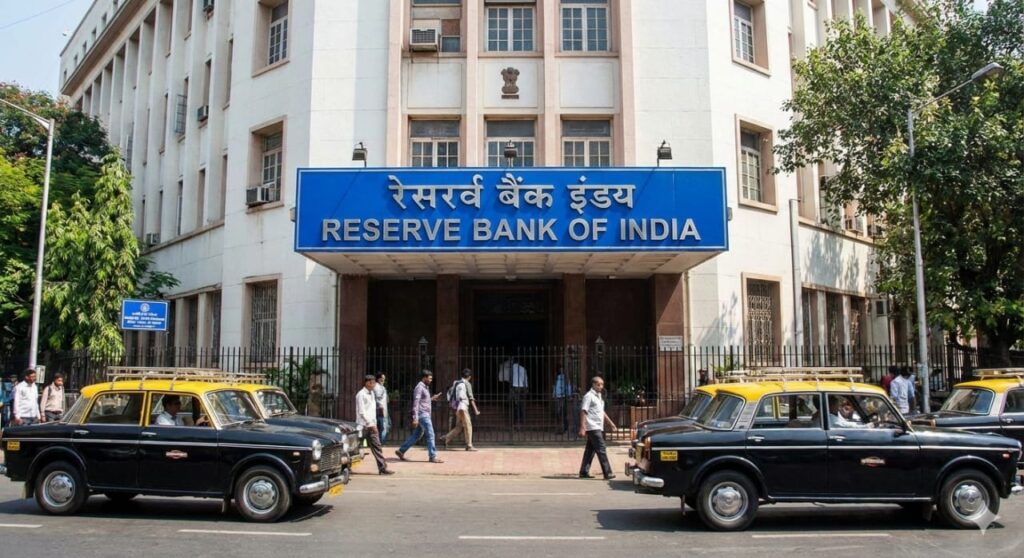
Imagine, for a moment, that you are driving a high-speed car. You naturally control the steering wheel and the accelerator. However, there is someone else entirely who controls the traffic lights. They ensure the quality of the road. Furthermore, they even manage the fuel supply. In the vast, complex journey of the Indian economy, that “someone” is undoubtedly the Reserve Bank of India (RBI).
Most of us interact with money every single day. We earn it, spend it, and, hopefully, save it. Yet, surprisingly few of us stop to understand the powerful machine that keeps that money valuable. You might frequently see the RBI’s name on your currency notes. This note is signed by the Governor. But do you truly know what happens behind the guarded doors of its Mumbai headquarters?
Furthermore, the Reserve Bank of India is not merely a government building filled with files. On the contrary, it is the pulsating heartbeat of India’s financial system. It acts effectively as a strict referee for banks. It serves as a guardian for your hard-earned savings. Additionally, it is a fierce warrior against rising prices. Whether you are a student or a business tycoon, the RBI’s decisions hit your wallet directly.
In this comprehensive guide, we will strip away the confusing economic jargon. Instead, we will explore the Reserve Bank of India through clear stories and practical examples.
What is the Reserve Bank of India? (The “Big Boss” Analogy)
To understand this better, think of the banking sector as a large classroom. In this specific scenario, the commercial banks are the students. Consequently, the Reserve Bank of India is the strict but fair Headmaster.
Established initially on April 1, 1935, the RBI is India’s Central Bank. It serves as the apex regulatory body. This means, essentially, that it has the final say on how money moves around the country.
The Three Core Pillars:
To truly grasp the importance of the RBI, you only need to remember three main roles:
The Supplier: Uniquely, it is the only body allowed to issue currency notes.
The Regulator: Furthermore, it sets the rules that all other banks must strictly follow.
The Stabilizer: Finally, it manages interest rates to keep the economy running smoothly.
Therefore, the RBI does not work for profit. Rather, it works for stability. Its primary job, above all else, is to ensure the Rupee remains stable. It must also ensure the banking system does not collapse.
The Origin Story: From 1935 to the Digital Age
The history of the Reserve Bank of India is deeply fascinating. Surprisingly, the blueprint for the RBI was drafted based on guidelines by Dr. B.R. Ambedkar. He presented these to the “Royal Commission on Indian Currency and Finance” back in 1925.
A Timeline of Trust:
1934: The British Government passed the Reserve Bank of India Act.
1935: Subsequently, the RBI commenced operations. Initially, it was a private bank. Its first headquarters was in Kolkata. Later, it moved to Mumbai in 1937.
1949: Following independence, the Government nationalized the RBI. Since then, it has been fully owned by the Ministry of Finance.
1969 & 1980: Later, the RBI oversaw the massive nationalization of commercial banks. This ensured banking reached rural India.
1991: During a severe crisis, the RBI played a heroic role. It managed India’s gold reserves and opened up the economy.
2016: More recently, the RBI managed the task of Demonetization. It withdrew old notes and printed new ones at breakneck speed.
Today, consequently, the Reserve Bank of India stands as a modern powerhouse. It is respected globally for its wise policies.
How the RBI Actually Controls Your Money (The Mechanics)
You often hear news anchors shouting about the “Repo Rate.” But why, exactly, should you care?
This is precisely where “Monetary Policy” comes into play. The RBI uses specific tools to control the flow of money. Think of these tools effectively as a water tap. The RBI can open the tap to flood the market with cash. Conversely, it can close it to dry up the supply.
1. The Repo Rate: The Remote Control
The Repo Rate is undoubtedly the most famous tool in the RBI’s arsenal.
Definition: It is the interest rate at which the RBI lends money to other banks.
How it impacts you:
If RBI hikes the rate: As a result, banks pay more to borrow. Consequently, they pass this cost to you. Your home loan interest rates go up. Thus, your EMI becomes more expensive.
If RBI cuts the rate: On the other hand, banks get cheap money. Therefore, they lower their lending rates. Loans become cheaper. This encourages you to buy a house or start a business.
2. The Reverse Repo Rate
This is, effectively, the exact opposite.
Definition: It is the rate the RBI pays banks to park their extra cash.
The Logic: If the RBI wants to remove money from the market, it increases this rate. Banks then prefer to keep money safe with the RBI. They choose this over lending to risky borrowers.
3. CRR (Cash Reserve Ratio)
Imagine, for instance, that you run a bank. You cannot simply lend every single rupee you receive.
The Rule: The Reserve Bank of India mandates that banks keep a percentage of deposits in cash with the RBI. This is known as the CRR.
The Benefit: This ensures that if a bank faces a crisis, it has cash. Essentially, it acts as a safety buffer for your deposits.
The RBI vs. Inflation: A Constant Battle
Inflation is, in reality, the invisible tax on your savings. If milk costs ₹50 today and ₹55 next year, your money has lost value. The Reserve Bank of India has a primary mandate called “Inflation Targeting.”
The 4% Rule
The Government and the RBI have officially agreed on a target. They aim to keep inflation at 4%. There is a small tolerance band. This means inflation should ideally stay between 2% and 6%.
How They Fight High Prices
When inflation crosses 6%, the RBI gets worried. High inflation usually means people are spending too much money.
The Action: Therefore, the RBI raises the Repo Rate.
The Reaction: Consequently, loans get costly. People stop borrowing for cars. Similarly, businesses delay expansion.
The Result: Eventually, demand for goods falls. When demand falls, shopkeepers are forced to stabilize prices.
However, this is a delicate balance. If the RBI raises rates too high, growth slows down. Businesses might stop hiring. Thus, the RBI Governor walks a tightrope.
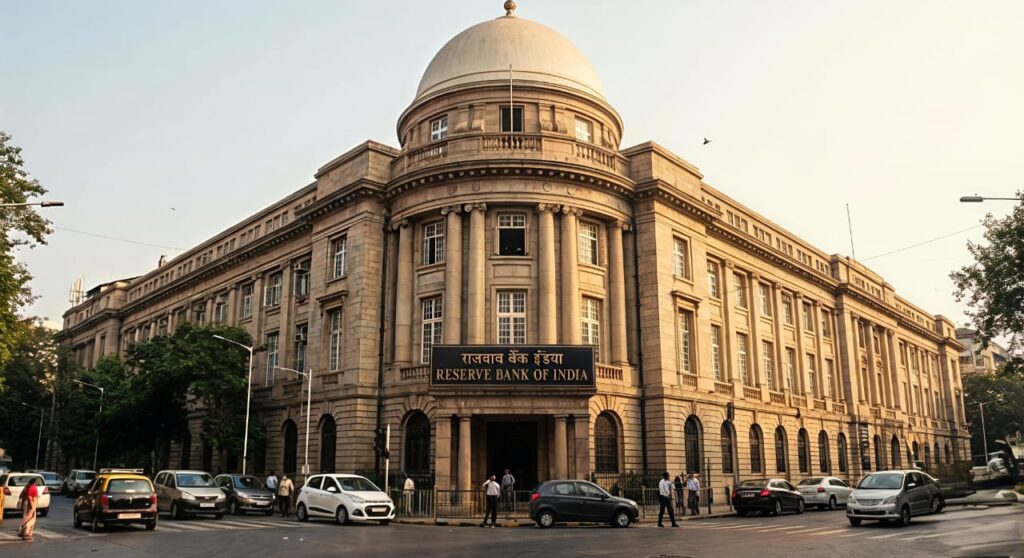
Currency Management: The Journey of the Indian Rupee
We all naturally love the smell of crisp, new banknotes. The Reserve Bank of India is the sole issuer of banknotes in India. The only exception is the one-rupee note and coins. Those are issued by the Ministry of Finance but distributed by the RBI.
Where is Money Made?
The RBI manages the printing of currency at four high-security presses:
Nasik (Maharashtra)
Dewas (Madhya Pradesh)
Mysore (Karnataka)
Salboni (West Bengal)
How to Spot a Fake Note (Practical Guide)
Counterfeit currency is a serious threat. Therefore, the RBI has embedded sophisticated security features. Here is how you can check your ₹500 note:
See-through Register: First, hold the note against the light. You will see the number 500.
Latent Image: Next, tilt the note. You can clearly see the number 500 near Gandhi’s portrait.
Color Changing Ink: Furthermore, the green thread changes to blue when you tilt the note.
Bleed Lines: Finally, feel the sides of the note. There are raised lines for visually impaired people to identify the value.
The Clean Note Policy
The RBI strongly urges citizens not to write on notes. Writing on the watermark window reduces their life. Consequently, the RBI spends crores annually to replace dirty notes.
The RBI as the “Banker’s Bank”
What happens if a major bank suddenly runs out of money? Panic would instantly ensue. People would rush to ATMs. As a result, the economy would crash. To prevent this nightmare, the Reserve Bank of India acts as the “Lender of Last Resort.”
If a bank faces a temporary cash crisis, the RBI steps in. It provides emergency funds. This ensures, fundamentally, that your trust in banks remains unshaken. Furthermore, the RBI manages the accounts of the Government. It accepts taxes and pays for large public projects.
Consumer Protection: Your Rights
In recent years, the Reserve Bank of India has focused heavily on you. They launched the “RBI Kehta Hai” campaign to educate everyone.
The Banking Ombudsman Scheme
This is one of the most powerful tools you have. If you have a problem with your bank, and they don’t fix it in 30 days, you can go to the RBI.
The Cost: There is no fee for this service.
The Process: You can file your complaint online. It is simple and fast.
The Power: The Ombudsman can force the bank to pay you back.
Limiting Your Liability in Fraud
Digital fraud is a big worry. However, the RBI has a “Zero Liability” policy.
The Rule: If money is stolen from your account due to a system fault, you aren’t responsible.
The Condition: You must tell your bank within 3 working days.
The Warning: Conversely, if you share your OTP, you might be liable. Therefore, keep your passwords secret.
The Organizational Structure: Who is in Charge?
The Reserve Bank of India is a massive organization. It is not run by just one person. In fact, it is run by a Central Board of Directors.
The Governor
The Governor is the face of the RBI. This person is appointed by the Government. While they have great power, they work with a team of experts.
The Deputy Governors
Additionally, there are four Deputy Governors. They handle different jobs. Some manage the rules for banks. Others manage the printing of money.
The Monetary Policy Committee (MPC)
Decisions on interest rates are taken by a committee. It consists of six members. Three are from the RBI. Three are external experts. They meet four times a year. This democratic process ensures fair decisions.
Future Forward: The Digital Rupee (e₹)
The world is changing. Cash usage is dropping. Meanwhile, digital payments are rising. In response, the Reserve Bank of India launched the Digital Rupee (e₹).
What is the Digital Rupee?
It is legal tender, just like cash, but it lives in your phone.
Is it UPI? No. UPI moves money between bank accounts. The Digital Rupee is the money itself.
Is it Safe? Yes. It is backed directly by the RBI.
The Benefits: It reduces the cost of printing paper. Additionally, it makes digital payments faster and safer.
Currently, this is in a testing phase. However, it represents the future of Indian money.
Why the RBI Matters to You
We have covered many details. But let’s summarize why the Reserve Bank of India matters to your life.
Safe Savings: First, the RBI makes sure banks don’t lose your deposits.
Fair Loans: Second, the EMI you pay is decided by RBI rates.
Price Control: Third, the RBI fights to keep grocery prices low.
Forex Reserves: Moreover, the RBI manages India’s foreign money. This keeps the Rupee strong when you travel abroad.
Strict Security: Finally, the RBI sets rules to prevent scams and financial crimes.
Conclusion
The Reserve Bank of India is the silent guardian of our economy. It operates in the background. Yet, its influence is felt every time you buy a coffee or pay a bill. From the days of British rule to the new era of Digital Rupees, the RBI has remained a pillar of trust.
As India grows, the role of the RBI will become even more vital. Understanding its work is not just for experts. It is essential for every citizen. By watching the RBI, you can make better choices for your own money and future.
So, the next time you see a ₹500 note, look at the seal of the Reserve Bank of India. It is the promise that keeps our nation moving forward.
About the Author