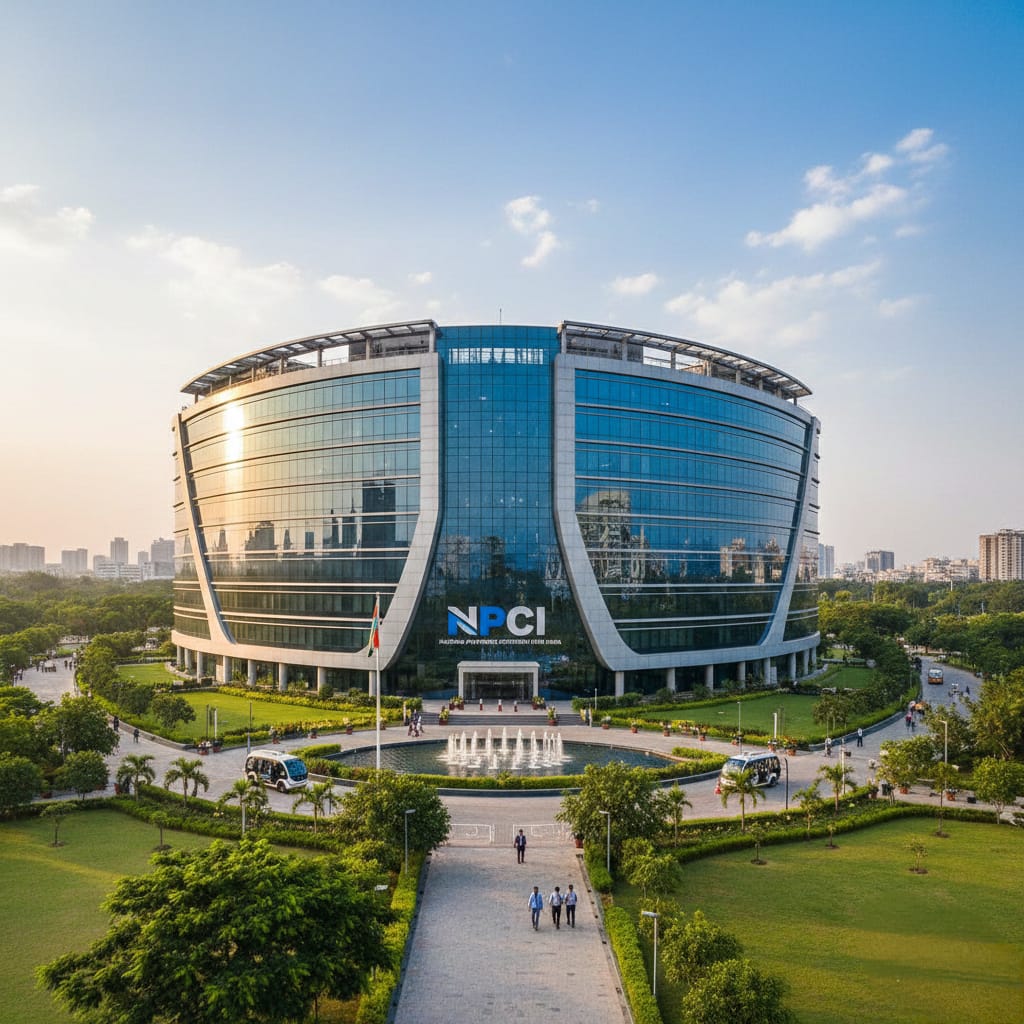
Imagine a world where the most sophisticated financial technology doesn’t come from a glass tower in Manhattan, but from a “not-for-profit” entity in Mumbai. For millions of Indians, this is not a futuristic dream; rather, it is their daily reality. Every time you scan a QR code at a tea stall or pay a high-end retailer via your phone, you are interacting with a masterpiece of engineering. Consequently, that masterpiece is the NPCI (National Payments Corporation of India).
As we navigate through 2026, the NPCI has officially transcended its role as a mere domestic payment processor. Furthermore, it has become a global benchmark for “Digital Public Goods.” In December 2025 alone, the NPCI facilitated a staggering 21.63 billion UPI transactions. To put that in perspective, that is nearly 700 million “handshake” moments every single day.
But what lies beneath the surface of this invisible giant? In this deep-dive exploration, we will peel back the layers of the NPCI ecosystem. We will explore how its “frugal innovation” model has baffled global economists and how its latest 2026 updates are making money more inclusive, secure, and international than ever before.
1. Defining the NPCI: The DNA of a Digital Architect
To truly understand the NPCI, one must first recognise its unique legal and operational structure. Unlike a typical government department, the NPCI operates with the agility of a Silicon Valley startup. Conversely, unlike a private corporation, its primary goal is not profit maximisation; instead, it focuses on public welfare.
A Hybrid Powerhouse
The NPCI was established in 2008 as a “Section 8” company. This designation means it is a not-for-profit organization. Initially, it was a joint initiative of the Reserve Bank of India (RBI) and the Indian Banks’ Association (IBA). However, its ownership has since diversified. Today, a consortium of public, private, and even foreign banks holds shares. Furthermore, in 2020, the NPCI diluted its shareholding to include non-bank players like PhonePe and Amazon Pay. Consequently, this broad ownership ensures that the NPCI remains a neutral, industry-wide utility.
The Frugality Factor
Perhaps the most shocking aspect of the NPCI is its cost-efficiency. According to 2025 financial reports, the NPCI processes transactions at a cost of less than ₹0.10 (10 paise) per transaction. In contrast, global networks often charge percentages that are significantly higher. Consequently, the NPCI has proven that high-scale digital infrastructure does not have to be expensive to be effective.
2. The Multi-Layered Arsenal: Products that Power a Nation
While the world knows the NPCI primarily for UPI, its portfolio is vast and multifaceted. Each product is a cog in a machine designed for total financial inclusion.
UPI: The Crown Jewel
Unified Payments Interface (UPI) is the NPCI‘s most famous invention. By 2026, it has become the default mode of payment for over 450 million Indians. Furthermore, the introduction of UPI 2.0 features, such as pre-authorized mandates and overdraft facilities, has bridged the gap between savings and credit.
RuPay: Challenging the Global Duopoly
For decades, Visa and Mastercard held a tight grip on the card market. However, the NPCI launched RuPay to provide a domestic alternative.
Current Standing: As of early 2026, RuPay holds a 38% volume share in India’s credit card market.
The Secret Sauce: By allowing RuPay credit cards to be linked to UPI, the NPCI gave users the ability to pay via credit at millions of small merchant points that never owned a swipe machine. Consequently, RuPay has become the “common man’s credit card.”
AePS: The Backbone of Rural India
The Aadhaar Enabled Payment System (AePS) is arguably the NPCI‘s most socially significant product. It allows citizens to withdraw cash using only their fingerprint and Aadhaar number. Furthermore, in 2026, the NPCI introduced “AePS 3.0,” which features AI-driven liveness detection to prevent biometric fraud. Consequently, even the most remote villages now have access to “Micro-ATMs” powered by the NPCI.
3. The 2025-26 Innovation Leap: Voice, Offline, and Delegated Payments
The NPCI refuses to stagnate. To maintain its dominance, the organization has launched several “Next-Gen” features that address the specific pain points of the Indian user base.
Hello! UPI (Conversational AI)
Language and literacy are no longer barriers to digital payments. Through Hello! UPI, the NPCI has integrated voice-activated payments.
How it works: Users simply speak to their phone in Hindi, English, or eight other regional languages.
The Impact: For an elderly person or a farmer in a busy market, saying “Pay ₹200 to Ramesh” is far easier than navigating a complex app interface. Furthermore, this feature is projected to bring 100 million new users into the NPCI fold by the end of 2026.
UPI Lite X: The Offline Revolution
Internet connectivity can be spotty in basements, elevators, or remote hills. Consequently, the NPCI developed UPI Lite X.
The Technology: It uses Near Field Communication (NFC) to transfer funds between two devices without an active internet connection.
The Limit: Users can hold up to ₹2,000 in their “on-device” wallet. Consequently, the NPCI has ensured that “No Network” is no longer an excuse for a failed payment.
UPI Circle: Delegated Power
The NPCI recently launched “UPI Circle” to solve the “family dependency” problem.
Full Delegation: A parent can set a monthly limit for their child. The child can then spend that money independently without needing the parent’s OTP every time.
Partial Delegation: The child initiates the payment, and the parent receives a notification to approve it on their own device.Consequently, the NPCI has created a safe environment for the next generation to learn digital financial literacy.
4. NPCI International: The Global Export of Indian Genius
The NPCI is no longer just an Indian entity; rather, it is an international diplomat. Through its arm, NPCI International Payments Limited (NIPL), it is actively colonizing the global financial landscape.
The Global Map in 2026
As of January 2026, the NPCI has successfully integrated its systems in several key regions:
| Region | Active/Upcoming Partnership |
| Europe | France (Eiffel Tower & retail), Cyprus (Eurobank) |
| Middle East | UAE (Neopay), Bahrain (BENEFIT), Qatar |
| East Asia | Japan (NTT DATA), Singapore (PayNow) |
| South America | Peru (Central Reserve Bank collaboration) |
Why the World is Buying into NPCI
Most international payment systems are built on legacy infrastructure that is slow and expensive. In contrast, the NPCI offers a “Plug-and-Play” model that is real-time and cost-effective. Furthermore, nations are adopting NPCI tech to reduce their reliance on Western-controlled payment gateways. Consequently, the NPCI is not just exporting code; it is exporting financial sovereignty.
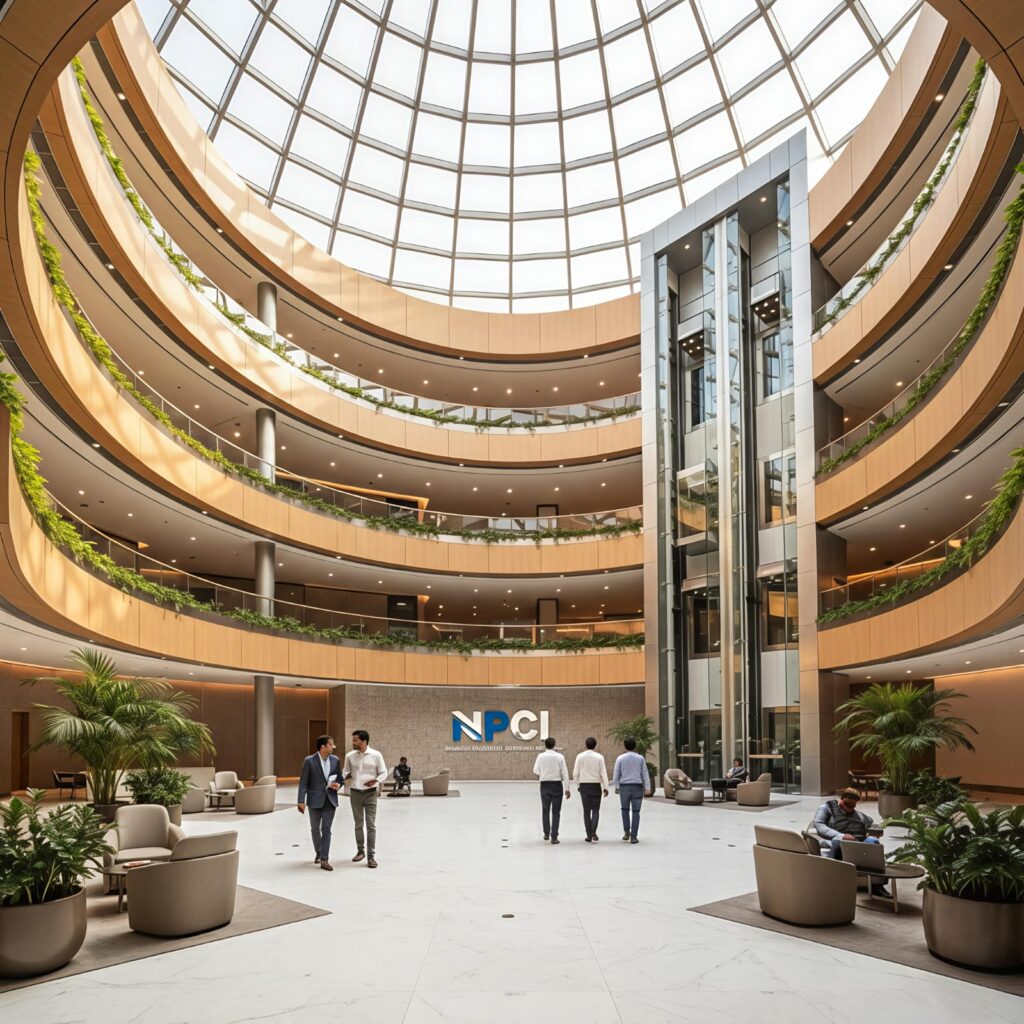
5. The “Anti-Wikipedia” Perspective: The Strategy Behind the Stats
If you read a dry summary, you might think the NPCI succeeded simply because the government mandated it. However, the reality is far more nuanced. The NPCI succeeded because it understood behavioral psychology.
The War on the Wallet
Before the NPCI, using a card was a “premium” experience. Merchants hated the fees, and customers hated the clunky machines. The NPCI‘s genius was the Interoperable QR Code.
The Strategy: Instead of building expensive hardware, they built a sticker.
The Result: It cost the merchant zero rupees to display a QR code. Consequently, the NPCI turned every “Kirana” store into a digital terminal.
The Security Shield
In 2026, the NPCI introduced the “UPI Safety Shield.” Unlike traditional systems that flag fraud after the money is gone, the NPCI now uses AI to provide Pre-Transaction Alerts.
Real-world scenario: If you try to pay a “high-risk” ID, your app will pause for 5 seconds and display a warning. Furthermore, the NPCI has limited balance enquiries to 50 per day to prevent “bot-probing.” Consequently, the NPCI has made UPI the safest real-time network in the world.
6. Challenges and the “Monetization Paradox”
Despite its staggering success, the NPCI faces a significant challenge: Sustainability. Because the NPCI is a Section 8 company and UPI is free for users, banks often struggle to cover the cost of the massive server infrastructure required. Consequently, there is a constant debate about the Merchant Discount Rate (MDR).
The 2026 Status: To solve this, the NPCI has introduced fees for “Pre-approved Credit Lines” and high-value merchant transactions (above ₹2,000).
The Goal: To ensure the system remains free for the “Chai-wala” while making the “Luxury Mall” pay for the infrastructure. Consequently, the NPCI is performing a delicate balancing act between social mission and economic reality.
7. How to Leverage the NPCI Ecosystem: Expert Advice
If you are a consumer or a small business owner in 2026, you should be doing more than just scanning a QR code. Here is how to maximize your NPCI experience:
Switch to RuPay Credit: If you use credit cards, move to RuPay. This allows you to earn rewards even on small UPI transactions. Furthermore, it helps build the domestic economy.
Enable UPI Lite X: If you travel to remote areas, set up your offline wallet. It ensures you are never stranded without a payment option.
Use Bharat Connect (BBPS): Stop using multiple apps for your electricity, water, and insurance bills. The NPCI‘s Bharat Connect (formerly BBPS) provides a unified, “always-on” platform with 99.9% uptime.
Voice for Seniors: If you have elderly family members, teach them Hello! UPI. It reduces the fear of “pressing the wrong button” and gives them financial independence.
Conclusion: The Legacy of the NPCI
The NPCI is not just a facilitator of money; rather, it is a facilitator of trust. It has taken a complex, exclusionary financial system and simplified it for 1.4 billion people. Furthermore, as it expands to the Eiffel Tower and the streets of Tokyo, it is proving that Indian innovation is world-class.
Consequently, the NPCI represents the new India: efficient, inclusive, and globally ambitious. It is the invisible giant that ensures that whether you are buying a 10-rupee snack or a 10-lakh-rupee car, the technology behind you is robust, secure, and uniquely yours.
As we look toward the 2030s, the NPCI is already experimenting with CBDC (Central Bank Digital Currency) and AI-driven predictive lending. The journey is just beginning. Furthermore, the world is watching, and for once, the world is following.
NPCI Quick Reference (2026 Data)
| Feature | UPI Standard | UPI Lite X | RuPay Credit on UPI |
| Transaction Limit | ₹1 Lakh (up to ₹5L for specific sectors) | ₹500 | Bank specific |
| Internet Needed? | Yes | No (NFC) | Yes |
| PIN Required? | Yes | No | Yes |
| Best For | Daily transfers | Small, quick payments | Credit-based spending |
About the Author