Imagine the global economy is a massive, interconnected fleet of ships sailing across a turbulent ocean. Occasionally, a ship hits a rogue wave or develops a leak in its hull. Without a central lifeguard, that single sinking ship could pull the entire fleet underwater. This is precisely why the International Monetary Fund (IMF) exists. The International Monetary Fund acts as the world’s ultimate financial first responder, ensuring that when a nation’s economy stumbles, the rest of the world does not fall with it.

What is the International Monetary Fund (IMF) and Why Should You Care?
At its core, the International Monetary Fund is an organization of 190 countries working to foster global monetary cooperation. While many people confuse it with the World Bank, the International Monetary Fund has a very specific “doctor-like” niche. It focuses on the “macro” health of nations—interest rates, debt levels, and currency stability.
The Guardian of Your Purchasing Power
You might think the International Monetary Fund only deals with high-level government officials, but its work affects your daily life. For instance, if a country’s currency collapses, the price of your imported morning coffee or your smartphone could skyrocket. By stabilizing these currencies, the International Monetary Fund helps keep your cost of living predictable. Furthermore, it ensures that your savings do not lose value due to runaway hyperinflation caused by global instability.
A Safety Net for the Modern Age
Furthermore, the International Monetary Fund provides a platform where countries can resolve financial disputes without resorting to trade wars. Consequently, this cooperation keeps the global supply chain moving, ensuring that products reach your doorstep without massive inflationary spikes. In contrast to historical eras where economic disputes led to physical conflict, the International Monetary Fund offers a diplomatic avenue for fiscal resolution.
The Three Pillars: How the International Monetary Fund Operates
To understand the International Monetary Fund, you must look at its three primary tools: surveillance, technical assistance, and lending. Each pillar supports the overarching goal of global financial stability.
1. Economic Surveillance: The Annual Check-up
Just as you visit a doctor for an annual physical, every member country receives a visit from International Monetary Fund experts. These economists analyze the nation’s “vital signs,” such as its GDP growth and inflation rates.
Early Warning Systems: They identify risks before they turn into full-blown crises.
Policy Advice: They suggest ways to improve tax collection or reduce wasteful spending.
Global Transparency: By publishing these reports, the International Monetary Fund helps investors make informed decisions.
2. Technical Assistance: Building Stronger Foundations
Knowledge is power, and the International Monetary Fund shares its vast expertise with developing nations. Many countries struggle because they lack the “plumbing” of a modern economy. Therefore, the International Monetary Fund sends specialists to help build central banks, design fair tax systems, and create anti-corruption laws. Consequently, these nations become more attractive to foreign investors, which fuels long-term growth.
3. Crisis Lending: The Lender of Last Resort
This is the most famous role of the International Monetary Fund. When a country runs out of money and cannot pay its international bills, it turns to the International Monetary Fund for a bailout. However, these loans are not “free money.” They come with conditions—often called structural adjustments—that require the country to fix the underlying problems that caused the crisis in the first place.
The Anatomy of an IMF Loan: A Real-World Perspective
When the International Monetary Fund steps in to help a struggling nation, it follows a rigorous process. Understanding this process reveals why the International Monetary Fund is both praised and criticized.
Step 1: The Request for Help
A country usually approaches the International Monetary Fund when its foreign exchange reserves are dangerously low. This often happens because of a sudden drop in commodity prices or internal mismanagement. Furthermore, a country might seek help if its banking sector is on the verge of a total meltdown.
Step 2: Designing the Program
The International Monetary Fund and the local government negotiate a “Letter of Intent.” This document outlines the reforms the country promises to make. In contrast to a standard bank loan, an International Monetary Fund loan focuses on long-term structural health. Consequently, the government might need to privatize certain industries or change its labor laws to become more competitive.
Step 3: Disbursement in Tranches
Money is not handed over all at once. Instead, the International Monetary Fund releases funds in stages. Consequently, the government must prove it is meeting its reform targets to receive the next installment. This “tough love” approach ensures that the International Monetary Fund resources—which come from member countries’ taxpayers—are used effectively.
Debunking Myths: Is the International Monetary Fund a Villain or a Hero?
Public opinion on the International Monetary Fund is often split. Some view it as a savior, while others see it as an intruder. Let’s look at the facts behind these common perceptions.
Myth: The IMF Causes Poverty
Critics often argue that the “austerity” measures required by the International Monetary Fund—such as cutting government spending—hurt the poor. However, the International Monetary Fund argues that without these cuts, the country’s entire economy would collapse, causing even more suffering. Furthermore, the International Monetary Fund has recently shifted its strategy to include “social spending floors” to protect health and education budgets during crises.
Myth: It Only Benefits Rich Nations
While it is true that wealthier nations have more voting power in the International Monetary Fund, the organization’s primary mission is to help the most vulnerable economies. In fact, during the 2020 global pandemic, the International Monetary Fund provided emergency financing to over 80 countries, many of which were low-income nations. Consequently, this prevented a global depression that would have harmed everyone.

Why the International Monetary Fund Matters in 2026
In today’s volatile world, the International Monetary Fund is more relevant than ever. We are currently facing “polycrisis” scenarios—where climate change, debt, and geopolitical shifts collide.
Addressing Climate Change
The International Monetary Fund now incorporates climate risks into its economic assessments. It helps countries understand how a transition to green energy will affect their budgets. Furthermore, it provides the “Resilience and Sustainability Trust” to help low-income countries prepare for climate disasters. By doing so, the International Monetary Fund ensures that the move to a sustainable future does not trigger a financial meltdown.
Managing Digital Currencies
As Bitcoin and Central Bank Digital Currencies (CBDCs) gain popularity, the International Monetary Fund provides the framework for how these digital assets should be regulated. Furthermore, it works to ensure that digital money does not become a tool for money laundering or terrorism. Without the International Monetary Fund, the digital finance world would be a “Wild West,” prone to massive scams and systemic failures.
How the International Monetary Fund Impacts Your Wallet
You might wonder, “How does a big building in Washington, D.C., affect my bank account?” The answer lies in the concept of contagion.
Investment Stability: If you have a retirement fund or a 401(k), those funds are likely invested in global markets. When the International Monetary Fund prevents a crisis in an emerging market, it protects your investments from losing value.
Trade Efficiency: Most of the products we use daily involve components from five or six different countries. The International Monetary Fund ensures the currencies of those countries stay stable enough for trade to continue smoothly. Consequently, your electronics and clothing stay affordable.
Low Interest Rates: Global financial stability leads to lower risk premiums. Therefore, the International Monetary Fund’s work helps keep global interest rates lower, which can eventually trickle down to the mortgage rates you pay.
The Evolution of International Monetary Fund Quotas
To maintain its power to help, the International Monetary Fund relies on a quota system. Each member country pays a subscription fee based on its relative size in the world economy.
Funding the Future
Furthermore, these quotas determine how much a country can borrow and how much voting power it has. Consequently, the International Monetary Fund is constantly reviewing these quotas to ensure they reflect the modern economic landscape. For instance, as India’s economy grows, its quota and influence within the International Monetary Fund are expected to increase.
The Role of Special Drawing Rights (SDRs)
In addition to traditional currency, the International Monetary Fund uses a unique international reserve asset called the SDR. The SDR is not a currency itself, but it represents a claim to currency held by International Monetary Fund member countries. Consequently, during a global crisis, the International Monetary Fund can “create” SDRs to provide liquidity to the entire world, much like a global central bank.
Case Study: The International Monetary Fund and the Asian Financial Crisis
In the late 1990s, several Asian countries experienced a sudden collapse in their currency values. This event, known as the Asian Financial Crisis, serves as a classic example of the International Monetary Fund in action.
The Initial Shock
Countries like Thailand, Indonesia, and South Korea saw their currencies lose half their value in a matter of weeks. Consequently, businesses could not pay their foreign debts, and unemployment soared. The International Monetary Fund quickly stepped in with multi-billion dollar rescue packages.
The Recovery and Lessons Learned
While the initial “bitter medicine” of the International Monetary Fund was painful, it worked. Furthermore, these countries emerged with much stronger banking systems and larger foreign exchange reserves. Consequently, they were much better prepared for the 2008 global financial crisis. This proves that the International Monetary Fund interventions, while difficult, can lead to long-term resilience.
The Future of the International Monetary Fund: Adapting to a Multi-Polar World
The world is changing, and the International Monetary Fund is changing with it. Historically, the United States and Europe held the most sway within the organization. However, the rise of China, India, and Brazil has forced the International Monetary Fund to rethink its governance.
Increased Representation
The International Monetary Fund is currently working to give emerging economies a louder voice. By doing so, the organization ensures that its policies are fair and reflect the needs of the entire globe, not just the West. Furthermore, this inclusivity helps maintain the International Monetary Fund’s legitimacy in a world that is becoming more fragmented.
Focus on Inequality
Modern research from the International Monetary Fund shows that extreme inequality actually hurts economic growth. Consequently, the International Monetary Fund now advises governments on how to create more inclusive economies where the benefits of growth are shared more broadly. Furthermore, it promotes the idea that “good economics” must also be “fair economics.”
Comparing the IMF to Other Global Institutions
To truly understand the International Monetary Fund, it helps to see where it fits in the global puzzle.
| Feature | International Monetary Fund (IMF) | World Bank | World Trade Organization (WTO) |
| Primary Goal | Macroeconomic Stability | Long-term Development | Trade Rules |
| Target | Central Banks/Finance Ministries | Infrastructure/Education Projects | Trade Disputes |
| Motto | “Global Financial Guardian” | “End Extreme Poverty” | “Free and Fair Trade” |
Practical Takeaways: What We Can Learn from the IMF
We can apply the principles used by the International Monetary Fund to our personal finances. The International Monetary Fund teaches us that preparation and discipline are the keys to long-term survival.
Build an Emergency Fund: Just as the International Monetary Fund keeps reserves for countries, you should keep 3–6 months of expenses for your own “bailout.”
Monitor Your Vitals: Regularly check your “debt-to-income” ratio. If it gets too high, take corrective action before a crisis hits. Furthermore, keep track of your credit score like the International Monetary Fund monitors sovereign ratings.
Invest in Technical Assistance: Spend money on education and skills. Just as the International Monetary Fund helps countries improve their systems, you should improve your own “earning infrastructure.”
The Impact of Geopolitical Tensions on the International Monetary Fund
In 2026, the International Monetary Fund faces the challenge of “geoeconomic fragmentation.” As major powers compete, the global economy risks splitting into rival blocs.
Navigating the Great Divide
The International Monetary Fund acts as a bridge between these blocs. Furthermore, it warns that a split global economy could reduce global GDP by up to 7%. Consequently, the International Monetary Fund works tirelessly to keep lines of communication open between the U.S., China, and the European Union.
Protecting the Vulnerable in a Fragmented World
When big nations fight, smaller nations often get crushed. Therefore, the International Monetary Fund provides a protective “buffer” for middle-income and developing countries. Consequently, these nations are not forced to choose sides, allowing them to continue trading with all parties for their own economic survival.
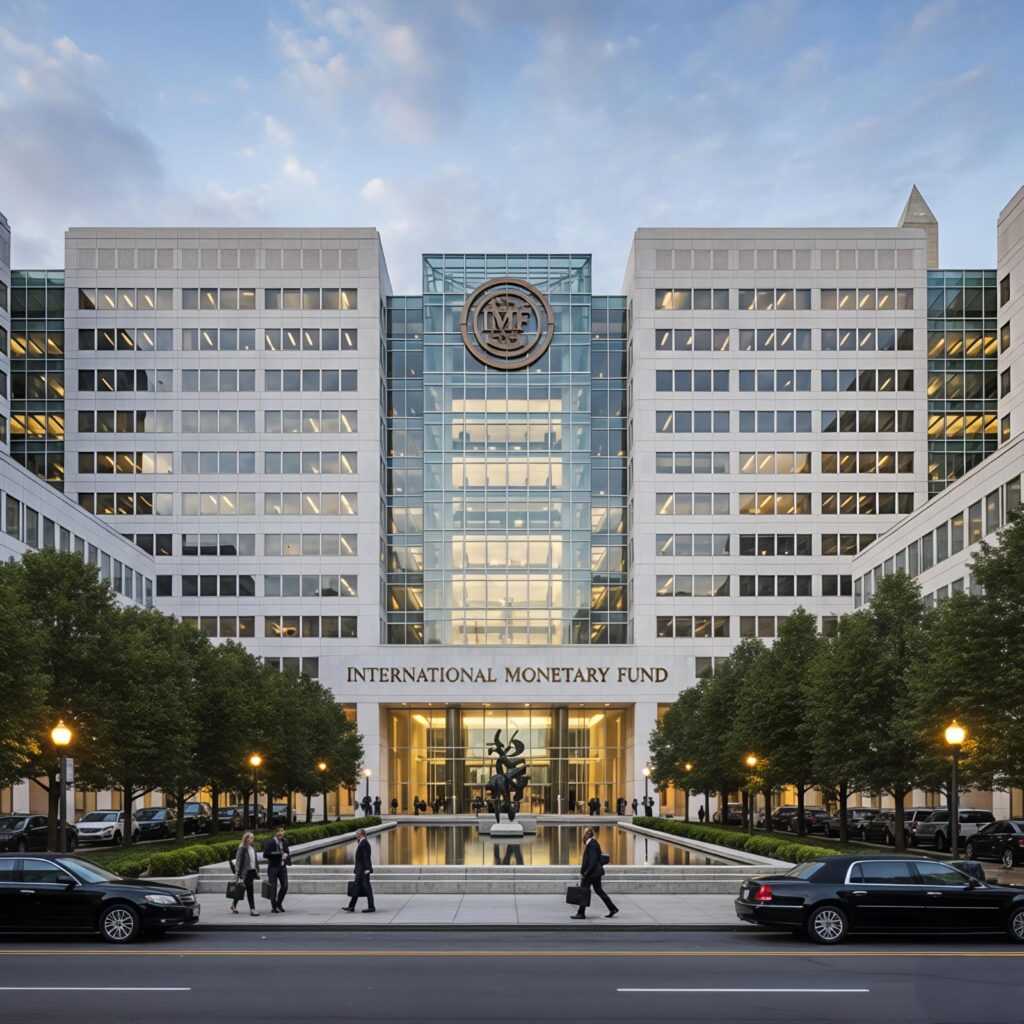
Conclusion: The Quiet Guardian of Global Prosperity
In conclusion, the International Monetary Fund is far more than just a lender of last resort. It is a massive data-gathering machine, a diplomatic forum, and a shield against economic chaos. While it is not perfect, the world would be a much riskier place without the International Monetary Fund standing watch.
By monitoring global trends and stepping in when trouble brews, the International Monetary Fund ensures that the “rogue waves” of the financial ocean do not capsize our collective prosperity. Whether it is fighting inflation or helping a small nation recover from a natural disaster, the International Monetary Fund remains the most important institution for global financial health. Furthermore, as we move deeper into the 21st century, the International Monetary Fund will continue to evolve, ensuring that the global financial system remains stable, inclusive, and resilient for generations to come.
Next time you hear about a “global market rally” or see a stable price on an imported good, remember that the International Monetary Fund likely played a silent role in making that happen. It is the invisible infrastructure that keeps the world’s money moving safely. Consequently, we all owe a bit of our financial peace of mind to the work of the International Monetary Fund.
About the Author