
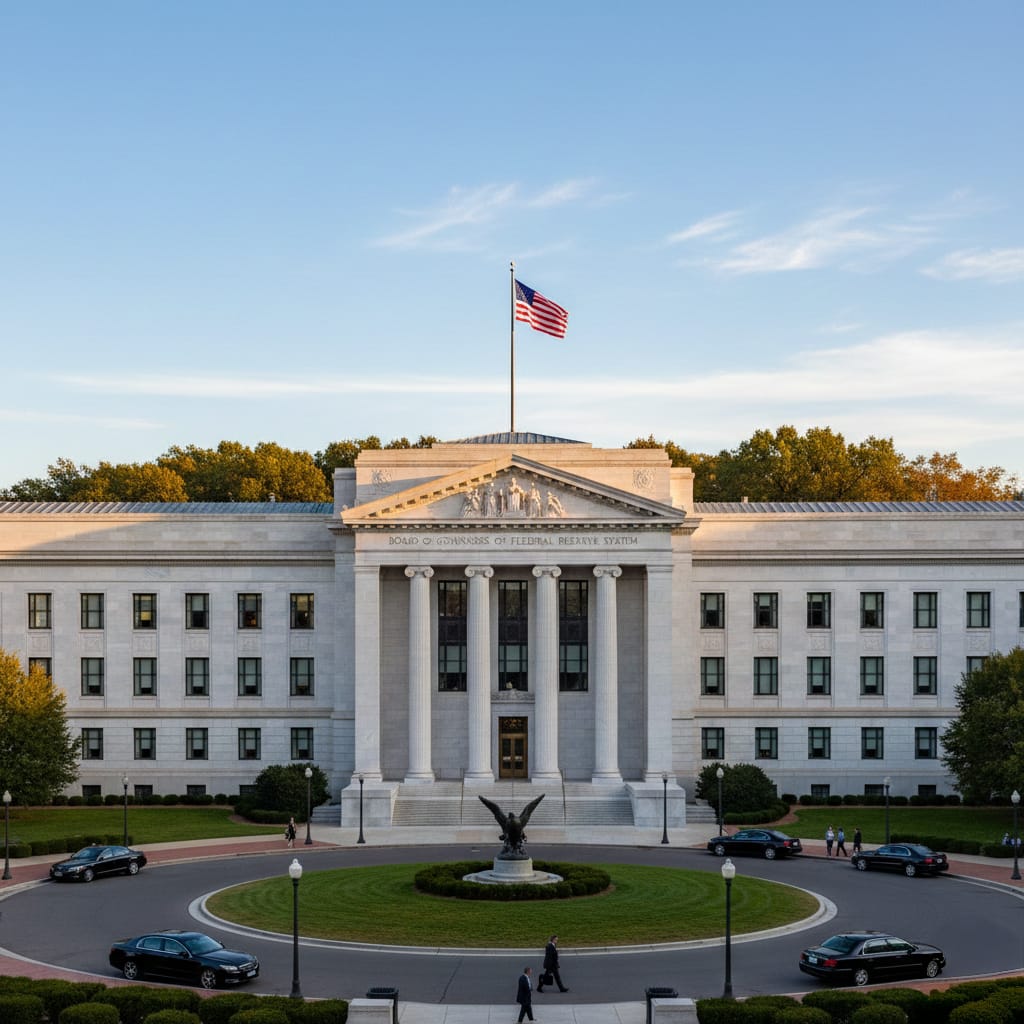
Have you ever wondered why the interest rate on your savings account suddenly ticks upward, or why a mortgage feels significantly more expensive than it did just two years ago? Most people point toward the news or general “market conditions,” yet the real architect behind these shifts is a singular institution in Washington, D.C., known simply as the FED. Formally titled the Federal Reserve, this organization acts as the central bank of the United States. While it might sound like a dry government department, the FED is actually the most influential economic force on the planet.
In this comprehensive guide, we are going to strip away the complex jargon. We will explore how the FED operates, why its decisions on interest rates matter, and, most importantly, how its 2026 strategies directly impact your bank account and long-term wealth.
Why the FED Exists: The Guardian of Economic Stability
Before the FED was established in 1913, the American economy was notoriously unstable. Bank runs were frequent, and financial panics could evaporate a family’s life savings in a matter of days. Consequently, Congress created the Federal Reserve to provide a safer, more flexible, and more stable monetary system.
Today, the FED operates under what economists call a “dual mandate.” This means it has two primary responsibilities:
Maximum Employment: Ensuring that as many people as possible can find work.
Stable Prices: Keeping inflation in check so that your dollar doesn’t lose its purchasing power.
Furthermore, the FED serves as the “lender of last resort.” If a major financial institution faces a sudden shortage of cash, the FED can step in to provide liquidity. This ensures that the entire financial system doesn’t freeze up during a crisis, protecting the gears of global commerce.
How the FED Controls the Economy: The Interest Rate Lever
Imagine the U.S. economy is a massive engine. If the engine is running too slowly (a recession), the FED adds fuel. If the engine is overheating (high inflation), the FED applies the brakes. The primary tool the FED uses to adjust this speed is the Federal Funds Rate.
1. Lowering Rates to Stimulate Growth
When the economy feels sluggish or unemployment begins to creep up, the FED typically lowers interest rates. Because borrowing becomes cheaper, businesses are encouraged to take out loans for expansion. Simultaneously, consumers are more likely to buy homes or cars on credit. Consequently, this surge in spending creates jobs and often boosts the stock market.
2. Raising Rates to Fight Inflation
In contrast, if prices for groceries, gas, and rent start rising too quickly, the FED will raise interest rates. Since borrowing becomes more expensive, both people and businesses tend to spend less. Although this cooling effect can be painful, it is a necessary step to prevent “hyperinflation,” where money loses its value so quickly that the economy collapses.
Expert Insight: It is a common misconception that the FED directly sets the rate on your specific credit card or car loan. Instead, it sets the rate that banks charge each other for overnight loans. However, because banks want to maintain their profit margins, they pass those costs (or savings) directly to you.
The Three Pillars: How the FED is Structured
Many people mistakenly believe the FED is a single entity controlled by the President. In reality, it is a unique hybrid of public and private structures designed to be independent of short-term political pressure.
The Board of Governors
Located in Washington, this group consists of seven members appointed by the President and confirmed by the Senate. They provide the high-level leadership and policy direction for the entire Federal Reserve system.
The 12 Regional Reserve Banks
The FED is spread across the nation with banks in cities like New York, Chicago, and San Francisco. These regional banks act as the “boots on the ground,” monitoring local business conditions and reporting back to headquarters. This ensures that the FED understands what is happening in the Midwest or the Deep South, not just on Wall Street.
The Federal Open Market Committee (FOMC)
This is the group you hear about on the news every few months. The FOMC is the committee that actually decides whether to raise, lower, or hold interest rates. Whenever investors wait with bated breath for a “FED announcement,” they are waiting for the results of an FOMC meeting.
The FED in 2026: Navigating New Challenges
As we move through 2026, the FED faces a landscape vastly different from previous decades. While traditional inflation remains a concern, new factors like artificial intelligence and shifting global trade routes are complicating the FED‘s decision-making process.
Furthermore, there is a significant leadership transition on the horizon. With Jerome Powell’s term as Chair expiring in May 2026, the markets are closely watching for a successor. Whether the next leader is a “hawk” (someone focused on fighting inflation) or a “dove” (someone focused on employment) will dictate the direction of your investments for years to come.
The FED and Your Wallet: A Practical Breakdown
Understanding the FED is not just an academic exercise for economists. It is vital for anyone who earns, spends, or saves money. Let’s look at how FED policy ripples through your daily financial life.
Your Savings Account
When the FED maintains higher interest rates, your savings account finally starts to earn a meaningful return. For many years, rates were near zero, which meant savers were effectively losing money to inflation. In 2026, however, the FED‘s stance has allowed for high-yield savings accounts that actually help your money grow.
Your Mortgage and the Housing Market
The FED has a massive, direct impact on the housing market. Even a small 0.5% shift in the FED funds rate can add hundreds of dollars to a monthly mortgage payment. Consequently, if you are looking to buy a home, you must watch the FED‘s signals like a hawk. When the FED hints at rate cuts, it might be the perfect time to lock in a new rate.
Credit Cards and Personal Debt
Most credit cards have “variable” interest rates tied to the Prime Rate, which moves in lockstep with the FED. If the FED raises rates, your credit card interest will almost certainly go up within one or two billing cycles. Therefore, paying down high-interest debt becomes even more critical when the FED is in a “tightening” cycle.
Storytime: How the FED Saved the System in 2008 and 2020
To understand the sheer power of the FED, we have to look at times of crisis. During the Great Financial Crisis of 2008, the world’s banking system was on the verge of a total meltdown. The FED took the unprecedented step of “Quantitative Easing” (QE), where it essentially injected trillions of dollars into the financial system to keep it from seizing up.
Similarly, during the 2020 pandemic, the FED acted as a massive safety net. By slashing rates to zero and providing emergency loans to businesses, the FED prevented a health crisis from becoming a permanent economic depression. While these actions were controversial—many argue they contributed to the inflation we see today—they demonstrate that the FED is the ultimate backstop for the American way of life.
How to Track the FED Like a Pro
You don’t need a degree in finance to stay informed. To stay ahead of the curve, you should pay attention to these three key indicators:
The “Dot Plot”: Every few months, the FED releases a chart showing where each member thinks interest rates will be over the next few years. This is the closest thing to a “crystal ball” in the financial world.
PCE Inflation Data: The FED prefers the Personal Consumption Expenditures (PCE) index over the more famous CPI. If the PCE number is rising, expect the FED to be aggressive with interest rates.
FOMC Minutes: Released three weeks after each meeting, these minutes provide a “behind-the-scenes” look at the arguments between FED officials. If you see many members worried about the labor market, a rate cut is likely coming.
Common Myths About the FED
Because the FED is so powerful and its inner workings are complex, it is often the subject of myths. Let’s debunk the most common ones.
Myth: The FED is a private corporation owned by banks.
Truth: While the 12 regional banks have “stockholders” (the commercial banks in their district), these banks do not “own” the FED in the traditional sense. They have no say in policy, and the FED‘s Board is a federal government agency.
Myth: The FED prints money to pay for government spending.
Truth: The FED does not print money to fund the deficit. The Treasury issues debt (bonds) to pay for spending. While the FED can buy those bonds, its primary goal is managing the money supply to hit its inflation and employment targets, not to bail out politicians.
Myth: The FED is trying to destroy the dollar.
Truth: The FED‘s entire mission is based on the dollar remaining the world’s reserve currency. A stable dollar is the foundation of the FED‘s power; therefore, they have every incentive to protect its value over the long term.
The Future: The FED and Digital Currency (CBDC)
One of the most debated topics in 2026 is the potential for a Central Bank Digital Currency (CBDC). Imagine a digital version of the U.S. dollar that you could hold in a digital wallet provided directly by the FED.
Proponents argue this would make payments instant and eliminate the need for expensive check-cashing services for the unbanked. In contrast, critics are deeply concerned about privacy and the potential for the government to track every transaction. As the FED continues its research, this will likely be the biggest financial story of the next decade.
Practical Checklist: Managing Your Money When the FED Moves
When the news breaks that the FED has changed its policy, don’t panic. Instead, use this practical checklist to adjust your financial strategy:
If the FED Raises Interest Rates:
Emergency Fund: Move your cash to a high-yield savings account or a Money Market Fund to capture the higher yields.
Debt Management: If you have a variable-rate loan (like a HELOC), consider refinancing into a fixed-rate loan before rates climb higher.
Bond Portfolio: Be careful with long-term bonds, as their value typically drops when interest rates rise.
If the FED Lowers Interest Rates:
Mortgage Refinance: Check if you can lower your monthly mortgage payment by refinancing at the new, lower rate.
Stock Market: Lower rates generally act as “tailwinds” for stocks. It might be a good time to ensure you are fully invested according to your risk tolerance.
Big Purchases: If you’ve been waiting to buy a car or a major appliance on credit, wait for the FED‘s cuts to filter down to the dealership.
Summary of Key FED Concepts for 2026
| Term | Simple Definition | How it Affects You |
| Federal Funds Rate | The “Master Interest Rate” set by the FED. | It dictates the cost of almost all borrowing in the U.S. |
| Hawkish | A policy stance focused on raising rates to stop inflation. | Generally bad for borrowers, good for savers. |
| Dovish | A policy stance focused on lowering rates to help jobs. | Generally good for the stock market and homebuyers. |
| The Beige Book | A report on current economic conditions across the 12 districts. | A great “vibe check” on whether the economy is growing or shrinking. |
Conclusion: Why You Should Care About the FED
The FED might seem like a distant, mysterious group of elite economists, but their decisions are felt in every grocery aisle and every paycheck. By understanding how the Federal Reserve balances the scales of employment and inflation, you gain a massive psychological and financial advantage. You can stop being a victim of “the economy” and start becoming an active participant who knows how to navigate the waves.
The FED is not just about billions of dollars and computer screens; it’s about the value of your labor and the security of your future. Staying informed about the FED is one of the most important investments you can make in your own financial literacy. As the world becomes more complex, the role of the FED will only expand. Now that you understand how the engine works, you can plan your journey with confidence.
About the Author