
Imagine a secluded, circular tower in Basel, Switzerland, where the world’s most influential financial leaders meet in total secrecy. They do not discuss your personal mortgage or your small business loan. Instead, they debate the very survival of the global economy. This is the Bank for International Settlements (BIS), an institution often called “the central bank for central banks.”
While the average person might never walk through its doors, the Bank for International Settlements (BIS) influences every transaction you make. Whether you are swiping a credit card in Tokyo or saving for retirement in New York, the rules written by the Bank for International Settlements (BIS) ensure the system doesn’t collapse. Consequently, understanding this “Bank of Basel” is essential for anyone who wants to grasp how money actually works in 2026.
1. Defining the DNA: What is the Bank for International Settlements (BIS)?
Founded in 1930, the Bank for International Settlements (BIS) is the oldest international financial institution in existence. Initially, its purpose was narrow: managing the reparation payments imposed on Germany after World War I. However, as the decades passed, its mission evolved into something far more ambitious.
Today, the Bank for International Settlements (BIS) serves as a collaborative hub for 63 member central banks, representing countries that make up 95% of the world’s GDP. Furthermore, it acts as a prime facilitator for monetary policy and financial stability. It is the glue that holds the fragmented pieces of the global financial puzzle together.
The Three Pillars of the BIS
To understand the Bank for International Settlements (BIS), you must look at its three primary roles:
A Forum for Discussion: It hosts the “Global Economy Meeting,” where central bank governors (like the Chair of the Federal Reserve) meet bimonthly to coordinate strategies.
A Research Powerhouse: It produces deep-dive reports on everything from inflation to the “green” transition of the financial sector.
The Bankers’ Bank: It provides actual banking services to central banks, holding around 7% of the world’s total foreign exchange reserves.
2. The Basel Accords: The Rulebook That Saves the World
If the global economy were a game, the Bank for International Settlements (BIS) would be the referee. Specifically, the Basel Committee on Banking Supervision, which is housed within the Bank for International Settlements (BIS), creates the “Basel Accords.” These are sets of regulations that tell banks how much “buffer” money they need to keep in their vaults. Furthermore, these rules prevent banks from gambling away too much of their customers’ deposits.
Basel I, II, and III: A Quick Evolution
Basel I (1988): This was the first attempt to set a minimum capital requirement. It forced international banks to hold at least 8% of their risk-weighted assets as capital.
Basel II (2004): This introduced more complex ways to measure risk. In contrast to the simpler first version, it focused on “supervisory review” and “market discipline.”
Basel III (Post-2008): After the Great Recession, the Bank for International Settlements (BIS) realized the old rules weren’t enough. Consequently, Basel III introduced much stricter requirements for “liquidity”—ensuring banks have enough cash to survive a 30-day crisis.
3. Innovation at the Edge: How the BIS Operates in 2026
In 2026, the Bank for International Settlements (BIS) is no longer just a “quiet club” for economists. Instead, it has transformed into a high-tech innovation hub. Furthermore, the Bank for International Settlements (BIS) is currently leading the charge into the future of digital money.
The BIS Innovation Hub
With centers in cities like Hong Kong, London, and Singapore, the Innovation Hub is where the Bank for International Settlements (BIS) experiments with “Central Bank Digital Currencies” (CBDCs). If you eventually use a “Digital Dollar” or a “Digital Euro,” the technology likely started as a pilot program at the Bank for International Settlements (BIS).
Major Projects to Watch:
Project Rialto: This project focuses on improving instant cross-border payments using tokenized central bank money.
Project Hertha: This initiative uses AI to identify financial crime patterns in real-time payment systems.
Project Leap: As quantum computing advances, the Bank for International Settlements (BIS) is working on “quantum-proofing” our entire payment system.
4. Practical Impact: Why the BIS Matters to Your Wallet
You might think, “I’m not a billionaire or a central banker, so why does the Bank for International Settlements (BIS) matter to me?” The reality is that the Bank for International Settlements (BIS) acts as the “lender of last resort for the lenders of last resort.”
1. It Protects Your Savings
When the Bank for International Settlements (BIS) enforces higher capital standards, it makes your local bank safer. The likelihood of a “bank run” or a total collapse is significantly reduced. Furthermore, the stability provided by the Bank for International Settlements (BIS) ensures that your digital deposits remain accessible even during market turbulence.
2. It Lowers the Cost of Sending Money
Sending money across borders is traditionally slow and expensive. However, through the Bank for International Settlements (BIS) and its focus on “cross-border payment interoperability,” the goal is to make international transfers as fast and cheap as sending a text message. Migrant workers and small businesses save billions in fees annually because of these standards.
3. It Fights Global Inflation
The Bank for International Settlements (BIS) provides the data and the forum for central banks to coordinate interest rate hikes. Without this coordination, countries might engage in “currency wars,” which would make the cost of your groceries skyrocket even faster. In contrast, unified action helps stabilize the purchasing power of your paycheck.
5. Intelligence and Innovation: The BIS AI Strategy
As we move through 2026, the Bank for International Settlements (BIS) has issued several warnings and guidelines regarding the “AI Boom.” According to recent Bank for International Settlements (BIS) bulletins, the surge in AI investment is reshaping how debt is managed globally.
While AI can make trading faster, the Bank for International Settlements (BIS) is concerned about “algorithmic bias” and “flash crashes.” Consequently, they are working on new standards to ensure that AI-driven trading doesn’t trigger a global market meltdown. Furthermore, the Bank for International Settlements (BIS) is encouraging central banks to use AI themselves to monitor risks in real-time.
6. A Legacy of Stability: Lessons from the 2008 Crisis
To understand the power of the Bank for International Settlements (BIS), we must look back at the 2008 Financial Crisis. At that time, many banks had very little actual cash on hand. Instead, they were heavily invested in risky subprime mortgages.
When the housing bubble popped, the system froze. In response, the Bank for International Settlements (BIS) accelerated the development of Basel III. Furthermore, they forced banks to hold “High-Quality Liquid Assets” (HQLA). This move was controversial at first because it limited how much profit banks could make. However, during the COVID-19 pandemic and the 2023 banking jitters, these buffers are what kept the system from shattering.
7. Navigating the Data: How to Track BIS Policies Like a Pro
If you are an investor, a student of finance, or just a curious citizen, you can follow the “bread crumbs” left by the Bank for International Settlements (BIS) to predict where the economy is going.
Step 1: Analyze the Annual Economic Report
Every June, the Bank for International Settlements (BIS) releases its “flagship” report. This document often predicts the biggest risks for the coming year. If the Bank for International Settlements (BIS) is worried about “debt levels,” you should be too.
Step 2: Use the Right Official Channels
While the Swiss-based Bank for International Settlements (BIS) handles banking, some countries use the same “BIS” acronym for product quality. Make sure you are looking at the right “BIS”! For global finance, always visit bis.org.
Step 3: Monitor the “Blue Book”
The Bank for International Settlements (BIS) publishes detailed statistics on payment systems. If you see a sudden shift in how much gold or foreign currency central banks are holding, it’s a sign that they are preparing for a major geopolitical shift. Furthermore, watching the Bank for International Settlements (BIS) data on credit-to-GDP gaps can help you spot a housing bubble before it bursts.
8. Addressing the Shadows: Transparency and Critiques
Despite its importance, the Bank for International Settlements (BIS) is not without its critics. Some argue that because it is not an elected body, it has too much power over the lives of everyday people. Activists frequently call for more transparency in the “Tower of Basel.” Furthermore, the fact that its meetings are closed to the public fuels conspiracy theories about “globalist agendas.”
In contrast to these views, the Bank for International Settlements (BIS) argues that its independence is what allows it to make tough decisions. They claim that if central bankers were subject to political whims, they wouldn’t be able to fight inflation effectively. Regardless of your stance, the Bank for International Settlements (BIS) remains a cornerstone of the modern world.
9. Charting the Course: The BIS in 2030 and Beyond
As we look toward the next decade, the Bank for International Settlements (BIS) will likely focus on three main areas:
Climate Risk: How will rising sea levels and extreme weather affect the solvency of global banks? The Bank for International Settlements (BIS) is developing “green finance” standards to address this.
Cybersecurity: With the rise of state-sponsored hacking, the Bank for International Settlements (BIS) is building a “Global Cyber Resilience” framework. Consequently, banks will be forced to upgrade their defenses.
De-Dollarization: As some countries look for alternatives to the US Dollar, the Bank for International Settlements (BIS) will facilitate the transition to a multi-currency world. Furthermore, it will likely act as the clearinghouse for these new digital assets.
Summary Table: The Impact of the BIS
| Feature | Impact on the Global Economy | Why It Matters to You |
| Capital Rules | Prevents banks from over-leveraging. | Keeps your bank deposits safe. |
| CBDC Research | Creates the tech for digital money. | Future-proofs your wallet. |
| Forum for Meetings | Coordinates global interest rates. | Affects your mortgage and car loan rates. |
| Research/Stats | Provides a “warning system” for crises. | Helps prevent economic depressions. |
10. Global Reach: The BIS and Emerging Markets
The Bank for International Settlements (BIS) is not just for wealthy nations. In fact, it is increasingly focusing on “Financial Inclusion” in emerging markets. Furthermore, the Bank for International Settlements (BIS) provides technical assistance to central banks in developing countries.
Bridging the Digital Divide
By helping developing nations implement digital payment systems, the Bank for International Settlements (BIS) is bringing millions of unbanked people into the formal economy. This reduces poverty and fuels global growth. Furthermore, the Bank for International Settlements (BIS) ensures that these new systems are compatible with international standards.
Debt Sustainability
Many developing nations struggle with debt. The Bank for International Settlements (BIS) tracks these debt levels and provides advice on how to manage them. Consequently, they help prevent “sovereign defaults” that could destabilize the entire global system. In contrast to private lenders, the Bank for International Settlements (BIS) focuses on long-term stability rather than short-term profit.
Strategic Advice: How Businesses Should React to BIS Trends
For business owners, the publications of the Bank for International Settlements (BIS) are a treasure trove of forward-looking data. Companies that align their strategies with Bank for International Settlements (BIS) trends often find themselves ahead of the curve.
Adapting to Tokenization
If the Bank for International Settlements (BIS) is prioritizing tokenized assets, your business should prepare to accept digital currencies. Integrating these technologies early can lower your transaction costs. Consequently, you gain a competitive advantage in an increasingly digital marketplace.
Managing Regulatory Risk
Regulatory shifts often originate at the Bank for International Settlements (BIS) before trickling down to national laws. Keeping an eye on the Basel Committee’s newsletters allows you to anticipate new compliance requirements. Furthermore, this proactive approach saves your company from the headache of sudden, last-minute adjustments to your financial workflows.
The BIS and the Future of Gold
Even in 2026, the Bank for International Settlements (BIS) remains one of the largest holders and managers of gold for central banks. In contrast to those who believe gold is a “relic,” the Bank for International Settlements (BIS) continues to facilitate gold-backed swaps. Consequently, it maintains the precious metal’s role as an ultimate hedge against systemic failure.
Furthermore, the Bank for International Settlements (BIS) is now exploring “Digital Gold” as a way to combine ancient stability with modern speed. We may see a world where gold becomes a more liquid asset for central bank settlements. Furthermore, this ensures that the global system has a “hard asset” anchor even in a purely digital age.
Understanding “The Tower”: A Tour of BIS Operations
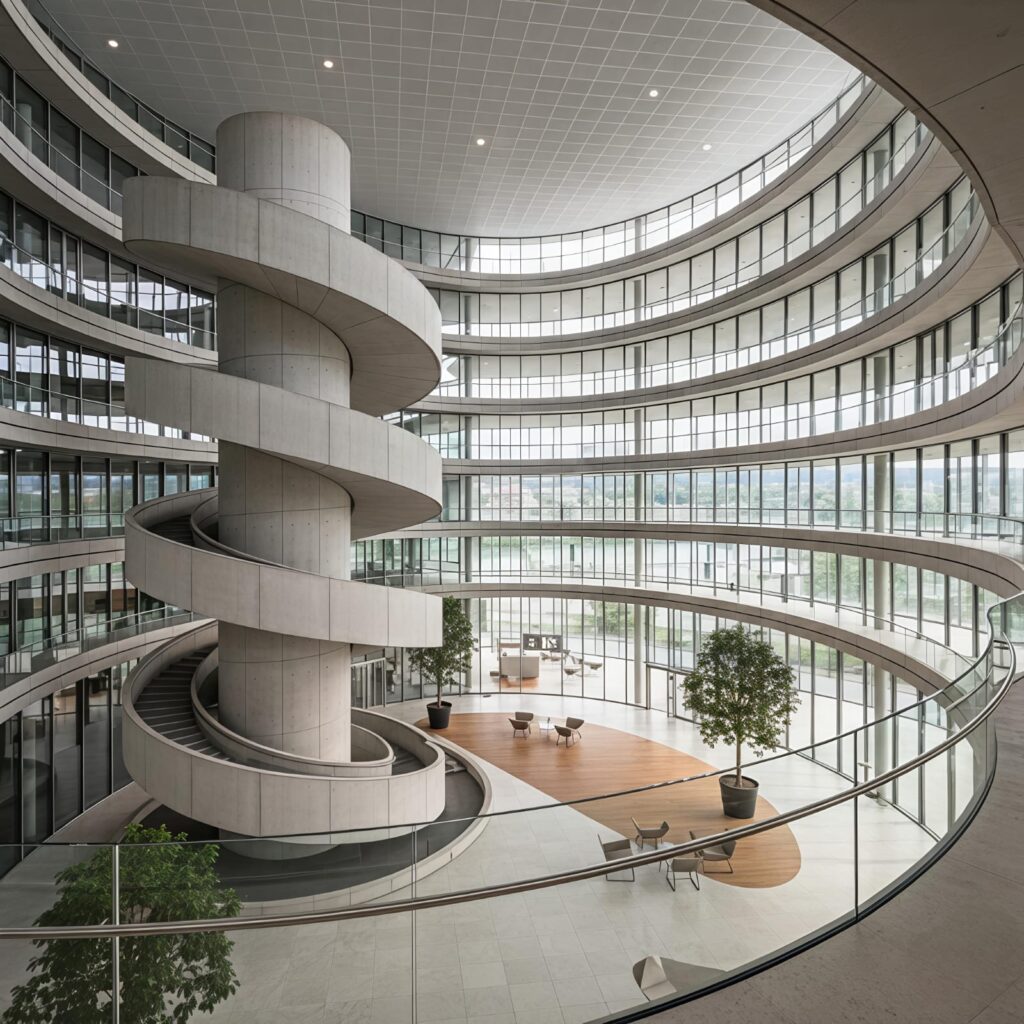
Walking through the corridors of the Bank for International Settlements (BIS) headquarters would feel like entering a neutral, international territory. It operates under a unique legal status, much like an embassy. This legal protection allows the Bank for International Settlements (BIS) to facilitate sensitive discussions between nations that might otherwise be at odds.
The Board of Directors
The governance of the Bank for International Settlements (BIS) rests in the hands of its Board of Directors. This group includes the governors of the world’s most powerful central banks. They meet ten times a year to decide the strategic direction of the institution. Consequently, their decisions ripple through the global economy within days.
Financial Strength and Reserves
Despite its quiet nature, the Bank for International Settlements (BIS) is incredibly wealthy. It manages hundreds of billions of dollars in assets. Furthermore, it generates a profit through its banking services, which it then reinvests into global economic research. In contrast to commercial banks, its goal is never to maximize profit, but to maximize stability.
Conclusion: The Guardian of Global Value
The Bank for International Settlements (BIS) may be invisible to most, but it is the foundation upon which the entire financial world is built. Its ability to adapt—from managing WWI reparations to pioneering quantum-proof encryption—is a testament to its staying power.
Consequently, the next time you hear about a “global liquidity crisis” or a “new digital currency,” remember the circular tower in Basel. The Bank for International Settlements (BIS) is likely already three steps ahead, writing the rules for the next chapter of human history. Furthermore, as we enter an era of AI and digital assets, the Bank for International Settlements (BIS) will remain the ultimate guardian of global value.
About the Author