Imagine a world where you can trade a fraction of a commercial building as easily as you send a WhatsApp message. Picture a financial system where your physical gold, your land titles, and even your government bonds exist as secure digital tokens on a single, unified rail. This isn’t a futuristic fever dream; rather, it is the impending reality powered by the Reserve Bank of India’s (RBI) Unified Markets Interface (UMI).
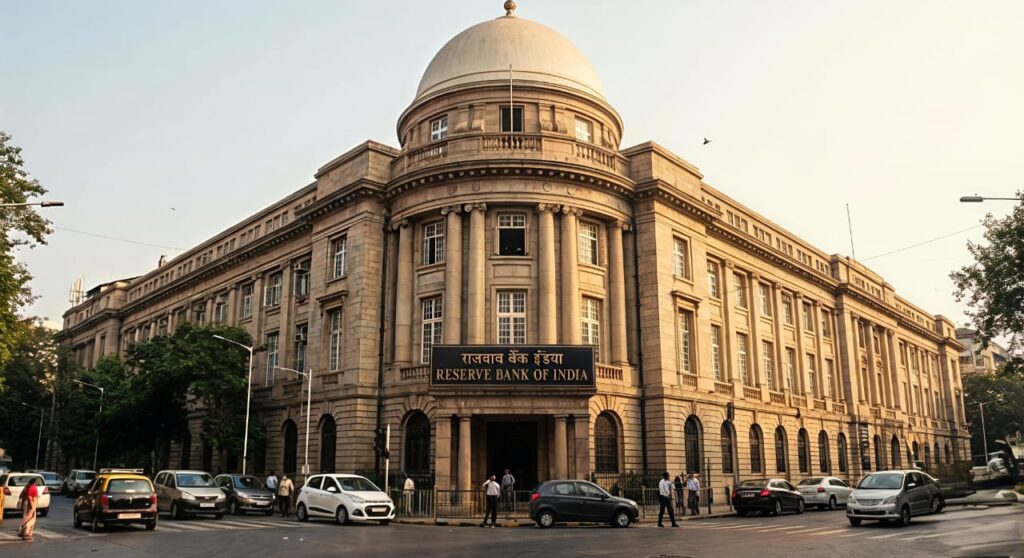
Consequently, India stands on the brink of a secondary “UPI moment.” Just as the Unified Payments Interface democratised daily transactions, the Unified Markets Interface (UMI) will democratise ownership. By leveraging the power to tokenise every Indian asset, the RBI is building a backend infrastructure that could make India the most capital-efficient economy in the world.
What Exactly is the Unified Markets Interface (UMI)?
To understand the Unified Markets Interface (UMI), we must first look at the current friction in Indian markets. Currently, if you want to use your property as collateral for a loan, you face weeks of paperwork, physical verification, and legal hurdles. Similarly, trading corporate bonds or obscure securities remains the playground of institutional giants.
The Unified Markets Interface (UMI) changes this by acting as a universal digital bridge. Furthermore, it provides a standardised protocol that allows different financial entities—banks, fintechs, and clearinghouses—to talk to each other instantly. Because the UMI is designed to tokenise every Indian asset, it converts physical or electronic value into “tokens” on a distributed ledger.
The Core Pillars of UMI
Interoperability: It allows seamless movement of value between different asset classes.
Atomic Settlement: Transactions happen instantly, meaning the delivery of the asset and the payment occur at the exact same moment.
Programmability: Smart contracts can automate dividends, interest payments, or even tax deductions.
How UMI Will Tokenise Every Indian Asset: The Mechanics of Change
The phrase “to tokenise every Indian asset” sounds ambitious, yet the technical roadmap is remarkably logical. Tokenization is the process of issuing a digital representation of a real-world asset on a blockchain or a centralized ledger managed by the RBI.
1. Real Estate: From Bricks to Bytes
Real estate is notoriously illiquid. However, the Unified Markets Interface (UMI) allows for fractional ownership. Instead of needing ₹1 Crore to buy a shop, you might buy a token worth ₹10,000 representing a piece of that shop. Consequently, the Unified Markets Interface (UMI) ensures that the title deed is verified, locked, and then “shredded” into digital tokens that anyone can trade.
2. Gold: Moving Beyond Digital Gold Apps
While digital gold exists today, it often sits in silos. In contrast, when the RBI uses the Unified Markets Interface (UMI) to tokenise every Indian asset, your gold becomes “fluid.” You could potentially use your tokenised gold to pay for a car or as instant margin for stock trading.
3. Government Securities (G-Secs) and Bonds
Retail participation in bonds has always been low due to complexity. Because the Unified Markets Interface (UMI) simplifies the entry barrier, every Indian citizen will soon hold G-Secs as easily as they hold a balance in a digital wallet.
Why the Unified Markets Interface (UMI) is the “Secret Weapon”
India’s financial regulators have realized that “siloed” growth is inefficient. While UPI handled the flow of money, the Unified Markets Interface (UMI) handles the store of value. Therefore, this interface is a secret weapon because it unlocks “dead capital.”
Unlocking Dead Capital
India holds trillions of dollars in “idle” assets like physical gold and land. Unfortunately, these assets don’t circulate in the formal economy. By using the Unified Markets Interface (UMI) to tokenise every Indian asset, the RBI effectively pumps massive liquidity into the system. As a result, a farmer in Bihar can tokenise his land records and access credit at market rates from a lender in Mumbai within seconds.
Reducing Counterparty Risk
In traditional markets, you always worry if the other party will deliver. On the other hand, the Unified Markets Interface (UMI) uses “Atomic Settlement.” If the tokens aren’t there, the money doesn’t move. Consequently, this eliminates the need for expensive intermediaries and escrow services.
The “UPI Moment” for Wealth: A Comparative Analysis
| Feature | Unified Payments Interface (UPI) | Unified Markets Interface (UMI) |
| Primary Function | Transfer of Currency | Transfer of Asset Ownership |
| Core Value | Convenience & Speed | Liquidity & Fractionalization |
| Asset Type | Cash/Bank Balance | Real Estate, Gold, Stocks, Bonds |
| Impact | Killed Cash for many | Will tokenise every Indian asset |
Step-by-Step: How You Will Use UMI in 2027
To make this tangible, let’s look at a practical scenario. Suppose you want to diversify your portfolio.
Access the Interface: You open your preferred wealth management app, which is now plugged into the Unified Markets Interface (UMI).
Select the Asset: You decide to buy a 0.001% stake in a solar farm in Rajasthan.
Instant Verification: The Unified Markets Interface (UMI) checks the “Token Registry” to ensure the solar farm is real and verified by the government.
The Swap: You pay using CBDC (Central Bank Digital Currency). In the background, the Unified Markets Interface (UMI) executes an atomic swap.
Ownership: You now see the “Solar Token” in your digital vault. This token automatically pays you a monthly dividend based on the electricity generated.
Furthermore, this entire process takes less than thirty seconds. Because the goal is to tokenise every Indian asset, your “vault” will eventually hold everything from your car’s title to your insurance policies.
The Role of Wholesale CBDC (e₹-W) in UMI
The “engine” under the hood of the Unified Markets Interface (UMI) is the Wholesale Central Bank Digital Currency (e₹-W). Unlike the retail version you might use for shopping, the wholesale version is designed for banks and large institutions.
When the RBI decides to tokenise every Indian asset, it needs a “settlement asset” that is as safe as cash but as fast as code. Consequently, the e₹-W acts as the oil in the UMI machinery. Because it is issued directly by the RBI, there is zero risk of the “money” failing during a trade. This creates a “trustless” environment where users don’t need to know or trust each other—they only need to trust the Unified Markets Interface (UMI).
Overcoming the Hurdles: Trust and Technology
While the vision is grand, implementing the Unified Markets Interface (UMI) requires immense precision. The RBI must ensure that the “digital twin” of the asset always matches the physical reality.
Data Privacy and Security
If we tokenise every Indian asset, the data becomes a goldmine for hackers. Therefore, the RBI is building the Unified Markets Interface (UMI) on a highly secure, permissioned framework. Unlike public cryptocurrencies, UMI will have “Identity Layers” where every participant is KYC-verified.
Legal Harmonisation
Consequently, Indian laws must evolve. The “Transfer of Property Act” was not written with tokens in mind. However, the government is already working on “Digital Asset Legislation” to ensure that a tokenised deed holds the same legal weight as a paper one in a court of law.
The Economic Ripple Effect
When we tokenise every Indian asset through the Unified Markets Interface (UMI), the cost of capital drops significantly. Lower costs mean more entrepreneurs can start businesses. Moreover, it creates a “transparent trail” for every asset, which naturally reduces black money and corruption in real estate dealings.
Impact on Small and Medium Enterprises (SMEs)
SMEs often struggle with working capital. By using the Unified Markets Interface (UMI), an SME can tokenise its “Invoices.” Instead of waiting 90 days for a payment, they can sell these invoice tokens to investors for immediate cash. Consequently, the Unified Markets Interface (UMI) acts as a lifeblood for the backbone of the Indian economy.
Strategic Significance: Why UMI is More Powerful than UPI
While UPI was about convenience, the Unified Markets Interface (UMI) is about wealth creation.
1. The Death of the “Minimum Investment”
Traditionally, high-yield investments like commercial real estate or private equity were reserved for the “crorepatis.” In contrast, the Unified Markets Interface (UMI) allows these to be broken into ₹500 tokens. By choosing to tokenise every Indian asset, the RBI is effectively ending the era of financial gatekeeping.
2. Collateral Efficiency
In the current system, your wealth is “trapped” in the asset. If you own a house, you can’t use 5% of its value to pay for an emergency without taking a massive loan. However, under the Unified Markets Interface (UMI), you could theoretically “pledge” a few tokens of your house to get instant liquidity.
Why Investors Should Care Right Now
If you are an investor, the Unified Markets Interface (UMI) represents the biggest shift in market structure since the introduction of dematerialized (demat) shares in the 1990s.
First, expect a surge in “Alternative Investments.” Second, prepare for a world where your “Net Worth” is visible in real-time, updated by the live market prices of your tokenised assets. Because the RBI intends to tokenise every Indian asset, the boundary between “investment” and “currency” will blur. Your house will become as liquid as your bank balance.
Technical Superiority: Why India is Leading
Many countries are experimenting with Central Bank Digital Currencies (CBDCs). However, India is the only nation building a “Full Stack” financial layer. By combining UPI (Payments), ONDC (Commerce), and now the Unified Markets Interface (UMI) (Assets), India is creating an integrated digital ecosystem that the West lacks.
The Unified Markets Interface (UMI) is the final piece of the puzzle. Without it, payments are fast, but ownership is slow. With the power to tokenise every Indian asset, the RBI is making ownership as fast as light.
Future Roadmap: What’s Next for UMI?
The RBI is currently in the pilot phase, starting with the tokenization of Certificates of Deposit (CDs) and Government Securities. Furthermore, we can expect a phased rollout over the next 24 to 36 months.
Phase 1 (2025): Tokenization of wholesale money market instruments.
Phase 2 (2026): Inclusion of corporate bonds and retail G-Secs.
Phase 3 (2027+): The big leap—real estate, gold, and agricultural produce.
Consequently, as the Unified Markets Interface (UMI) scales, the term “illiquid asset” will likely become obsolete.
Summary of Benefits
For Individuals: Access to high-value investments with small amounts of money.
For Banks: Reduced operational costs and 100% accurate collateral management.
For the Economy: Massive increase in velocity of capital and financial inclusion.
For the RBI: Better monitoring of systemic risks and more effective monetary policy.
Conclusion: The Future is Tokenised
The Unified Markets Interface (UMI) is not just a technical upgrade; it is a fundamental rewriting of the rules of wealth. As the RBI moves to tokenise every Indian asset, it is effectively deleting the word “illiquid” from our financial dictionary.
In contrast to the old, clunky systems of the past, the Unified Markets Interface (UMI) offers a sleek, transparent, and incredibly fast future. We are moving toward an era where “Value” flows as freely as “Information.” Whether it is a gram of gold or a hectare of farmland, the Unified Markets Interface (UMI) will ensure that every Indian asset is working, earning, and contributing to the nation’s growth.
The secret weapon has been unveiled. Consequently, the only question remains: are you ready to see your entire portfolio live on the Unified Markets Interface (UMI)?
About the Author