Introduction: The Tectonic Shift in Indian Bullion
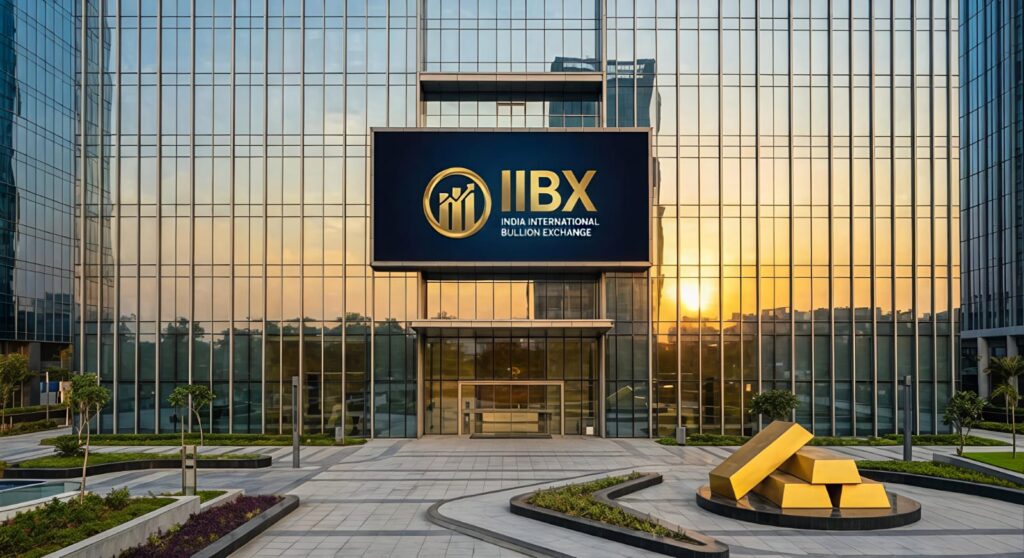
Gold is the heartbeat of the Indian economy. For centuries, it has served as a store of value, a symbol of status, and a crucial safety net for millions of families. However, despite being one of the world’s largest consumers of this precious metal, India has historically held little power over its pricing. In the past, we have always looked to the West—specifically London and New York—to tell us what our gold is worth. But the tides are finally turning. The launch of the IIBX (India International Bullion Exchange) marks a monumental shift in this dynamic.
This is not merely a new building in Gujarat; rather, it is a complete restructuring of the Indian bullion market. It represents a transition from opacity to transparency and from dependency to autonomy. Consequently, for the seasoned jeweler, the aspiring investor, or the keen market observer, understanding the IIBX is no longer optional. Indeed, it is essential.
In this deep-dive guide, we will explore every facet of this exchange. Furthermore, we will move beyond the basic definitions and uncover the operational mechanics, the strategic advantages for Qualified Jewellers, and the long-term economic implications for India. Additionally, we will provide a practical roadmap for participation, ensuring you have the knowledge to navigate this new ecosystem.
Part 1: The Genesis of IIBX – Why Now?
To truly appreciate the IIBX, we must first understand the problem it solves. For decades, the Indian gold market operated in a fragmented, somewhat opaque manner.
The Historical Bottleneck
Historically, gold imports were a gated community. Only nominated banks and a few select agencies (like MMTC or STC) had the license to import gold. As a result, jewelers were held captive by these intermediaries. For instance, if a jeweler in Mumbai needed 50kg of gold, they had to approach a bank. Then, the bank would dictate the price, often adding a hefty premium over the international rate. Moreover, the jeweler had no control over the timing of the import until the metal actually arrived.
The Goswami Committee & NITI Aayog’s Vision
The change didn’t happen overnight. Instead, it stemmed from the recommendations of the NITI Aayog and the Goswami Committee. Specifically, they argued a simple point: If India buys so much gold, why don’t we set the price?
Therefore, the IIBX was conceived with three primary pillars in mind:
Price Discovery: Establishing a benchmark price based on Indian demand.
Transparency: Creating a digital audit trail for every gram.
Disintermediation: Allowing actual users to access global suppliers directly.
In summary, just as the Taj Mahal stands as a symbol of heritage, the IIBX is designed to stand as the modern pillar of India’s financial infrastructure.
Part 2: Decoding the Infrastructure (GIFT City & IFSCA)
The IIBX is not located in Mumbai, the traditional financial hub. On the contrary, it is housed in the GIFT City (Gujarat International Finance Tec-City) in Gandhinagar. This location is strategic because of its unique legal status.
The “Offshore” Status
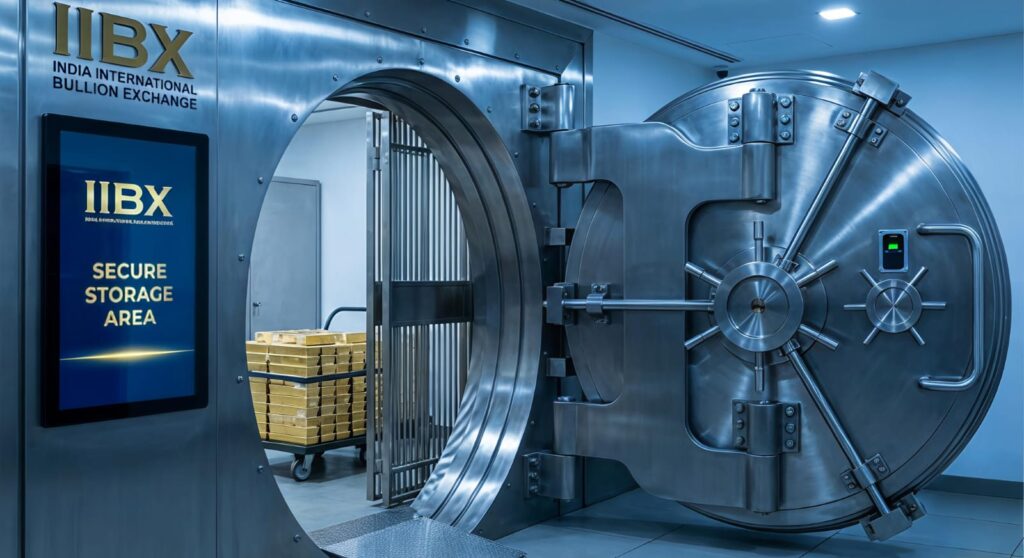
GIFT City is India’s first International Financial Services Centre (IFSC). Legally, it acts as an “offshore” territory. This distinction is crucial because when a global supplier flies gold into the IIBX vaults, they do not pay Indian customs duties immediately. Instead, the gold sits in a “duty-free” zone.
Why does this matter?
First, it allows for “Just-in-Time” Inventory.
Second, it increases speed. When a jeweler buys the gold, it is already physically present in India.
Finally, it ensures currency neutrality. Specifically, trading happens in US Dollars (USD), which protects international suppliers from Rupee volatility.
Part 3: Who Can Play? The “Qualified Jeweller” (QJ)
The IIBX is an exclusive club, but the doors are open if you meet the criteria. In particular, the exchange introduced the concept of the “Qualified Jeweller” (QJ).
The Eligibility Checklist (Updated Jan 2026)
To bypass the banks, a jeweler must obtain QJ status. According to the latest 2026 IFSCA consolidated circular, the guidelines are:
Entity Status: You must be a distinct legal entity (Company or LLP).
Net Worth: The entity usually needs a minimum net worth of ₹25 Crore. However, there are now relaxed norms for SEZ units with a jewelry export track record.
Turnover: Specifically, 90% of the average annual turnover must come from precious metals. Alternatively, if you are an SEZ unit, you must have an annual export turnover of at least ₹5 Crore.
Compliance: A clean slate is non-negotiable. In other words, you cannot have pending criminal proceedings.
The Onboarding Process: A Step-by-Step “How-To”
If you meet the criteria, here is how you get started.
Step 1: Partner with a Professional Clearing Member (PCM).
Step 2: Apply to the IFSCA.
Step 3: Open a Foreign Currency Account (FCA).
Step 4: Complete the Client Registration.
Part 4: The Mechanics of a Trade – From Screen to Vault
How does a trade actually happen? Let’s walk through a hypothetical scenario involving “Ramesh Jewellers.”
Scenario: The Purchase
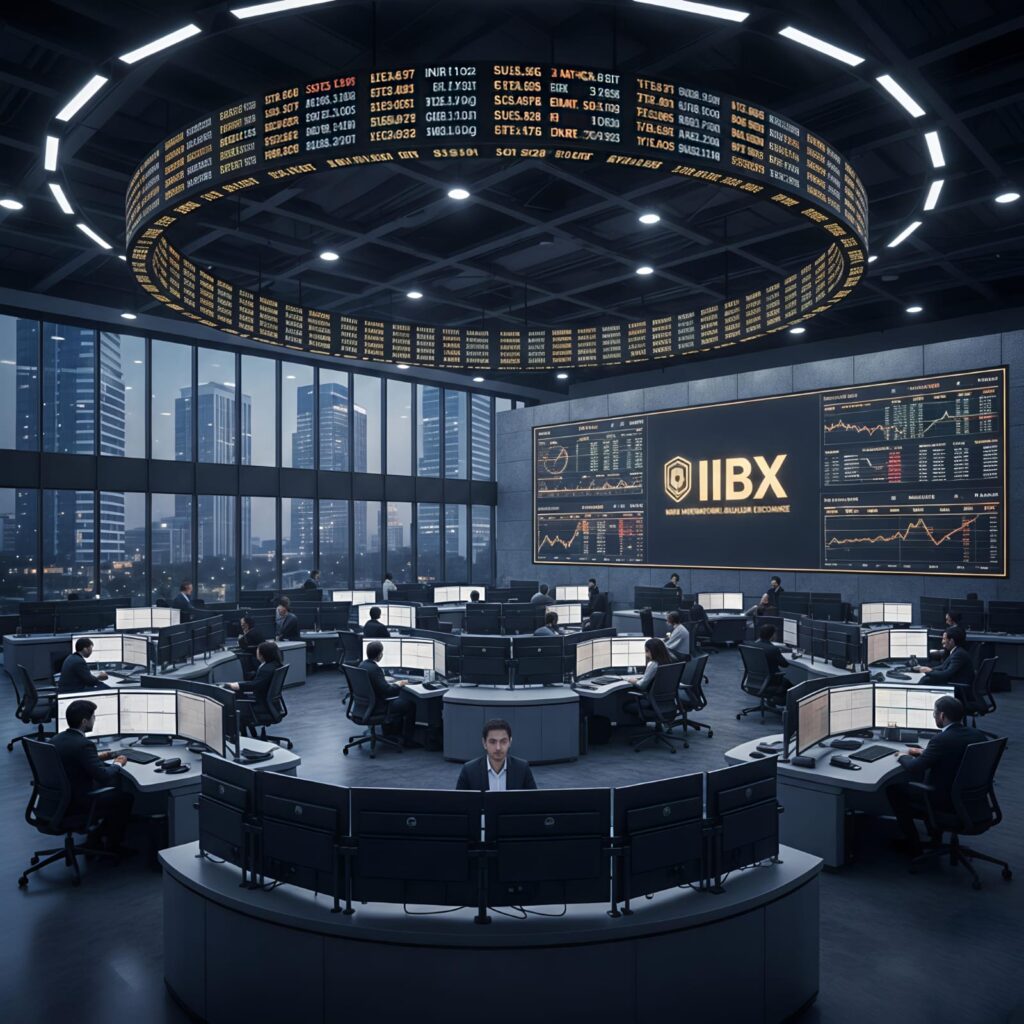
Ramesh needs 10kg of gold. In the old days, he would call his bank. Now, he logs into the IIBX terminal.
Funding: Ramesh transfers USD to his IFSC account.
Viewing: He sees live prices from Switzerland and Dubai.
Bidding: He places a buy order.
Matching: The IIBX engine pairs his order. Instantly, the trade is executed.
Scenario: The Settlement (T+0)
Unlike the stock market, the IIBX offers T+0 settlement.
At 4:30 PM: The clearing corporation debits Ramesh’s USD account.
At 5:00 PM: The ownership of the gold bars is digitally transferred. In addition, he receives a Bullion Depository Receipt (BDR).
Part 5: India Good Delivery (IGD) – Breaking the LBMA Monopoly
Previously, the global gold market was dominated by the LBMA “Good Delivery” standards. If a gold bar didn’t have a London stamp, it was often viewed with suspicion. However, the IIBX has introduced the India Good Delivery (IGD) standard.
In essence, this allows Indian refiners to be recognised on a global stage. By doing so, India reduces its reliance on foreign-minted bars. Furthermore, this encourages “Make in India” in the refining sector. As a result, the cost of physical “mintage” and shipping from Europe is eliminated, making the gold even more competitive.
Part 6: IIBX vs. The Competition (Banks & MCX)
To understand the value proposition, we must compare IIBX against existing alternatives.
| Feature | Nominated Banks | MCX (Derivatives) | IIBX (Spot) |
| Pricing Power | Bank sets price | The market sets futures | Market sets spot |
| Delivery | Standard | Optional | Mandatory |
| Currency | INR | INR | USD |
Key Insight:
The MCX is excellent for hedging. On the other hand, the IIBX is built for sourcing physical metal. Consequently, they complement each other.
Part 7: Electronic Gold Receipts (EGRs) – The Digital Bridge
One of the most innovative features is the Electronic Gold Receipt (EGR). In short, this instrument turns physical gold into a digital asset.
How it works:
Deposit: You deposit 1kg of gold into a vault.
Issue: The vault manager issues an EGR.
Trade: This EGR can be traded like a stock share.
Re-materialize: Eventually, the buyer can surrender the digital receipt and walk out with the physical bar.
This system is beneficial because it creates liquidity without the need to move heavy metal constantly.
Part 8: The Economic Impact – Macro Perspective
The implications of the IIBX extend far beyond jewelry. Indeed, this exchange is a macroeconomic tool.
1. Reducing the “Gold Premium”
Historically, Indian gold traded at a premium. By opening the doors to direct imports, the IIBX compresses these spreads. As a result, the Indian consumer pays a fairer price.
2. Dollar Outflow Management
Gold imports contribute to the Current Account Deficit (CAD). By centralizing trades, the government gains better visibility. Consequently, it allows for smarter regulation of dollar spending.
3. Internationalization of the Rupee
Currently, trades are in USD. However, the long-term vision includes Rupee-denominated contracts. If successful, this could make the INR a globally accepted currency for commodities.
Part 9: Challenges and The Road Ahead
Despite the optimism, the IIBX is not without its teething troubles. Specifically, there are three main hurdles:
The Liquidity Paradox: For an exchange to be efficient, it needs volume. In the beginning, liquidity was low. But as more banks and jewelers join, this is improving.
Technological Barriers: Smaller jewelers are used to informal trading. Therefore, the shift to a digital USD platform is a significant hurdle.
Regulatory Friction: Navigating the dual-regulatory environment of GIFT City and Customs can be slow. Nevertheless, the 2026 circulars show that the government is actively streamlining these processes.
Part 10: Unique Insights & Future Trends (2026-2030)
Where is this heading? Here is what the future holds:
The “Lease” Market
Currently, jewelers buy gold outright. In the future, the IIBX is perfectly positioned to introduce Gold Leasing Products. This would drastically reduce the working capital pressure on Indian businesses.
Silver is Next
While gold grabs the headlines, the IIBX is also targeting silver. Due to the rise of EVs and solar panels, industrial silver demand is skyrocketing. Therefore, the IIBX will become the primary hub for industrial silver.
Conclusion: The Dawn of a New Era
The IIBX (India International Bullion Exchange) is not just a trading platform; it is a symbol of India’s rising economic sovereignty. By centralizing imports, standardizing quality through IGD, and empowering local jewelers, it is building a foundation for a more prosperous nation.
Just as the Taj Mahal represents the pinnacle of craftsmanship, the IIBX represents the pinnacle of financial engineering in the bullion market. It invites transparency into a world that was once hidden behind bank vaults. It offers a fair deal to the jeweler and, ultimately, to the Indian consumer.
The journey toward becoming a global “Price Setter” has begun. Whether you are a jeweler looking to optimize costs or an observer interested in India’s growth story, the IIBX is the space to watch. The gold standard has been redefined, and it is now being set in GIFT City.
About the Author