
Financial systems act as the lifeblood of a modern nation, yet they often appear as an impenetrable fortress of acronyms. At the heart of this fortress sits the IBA (Indian Banks’ Association). This organization serves as the intellectual hub for the entire Indian banking sector. Consequently, every time you swipe a card or receive a salary hike in a public bank, you are feeling the influence of the IBA (Indian Banks’ Association).
Furthermore, this article provides an expert-level analysis of the IBA (Indian Banks’ Association). We move beyond basic facts to explore real-world impacts. Specifically, we look at how the association affects citizens, employees, and the national economy.
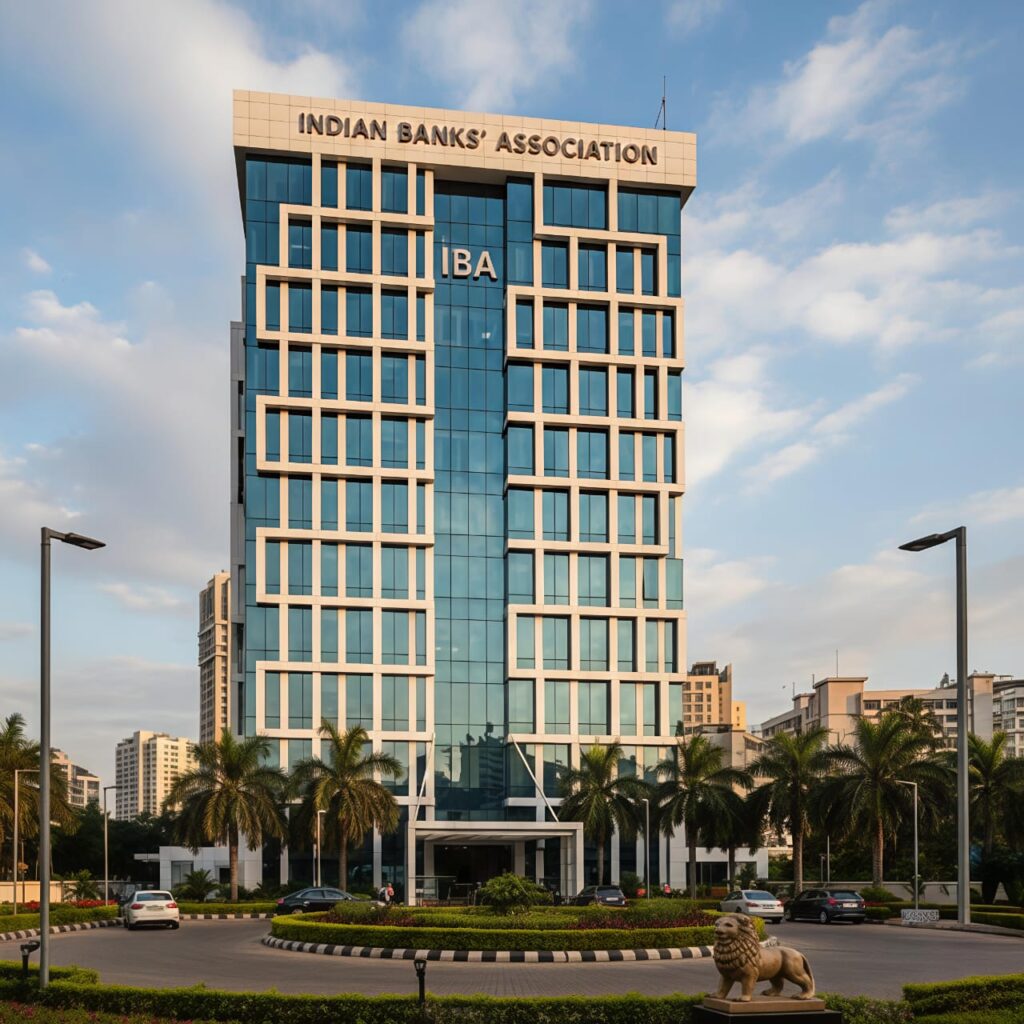
1. The Genesis and Evolution of the IBA (Indian Banks’ Association)
History often provides the best lens through which to view the present. On September 26, 1946, a group of 22 visionary banks realized that independent India required a unified financial front. Therefore, they established the IBA (Indian Banks’ Association) to foster coordination.
From 22 to 240+ Members.
Over the decades, the IBA (Indian Banks’ Association) has mirrored the growth of the Indian economy. Today, it represents a diverse spectrum of over 240 members. This includes public sector giants, innovative private players, and sophisticated foreign entities. Furthermore, it includes co-operative and regional rural banks. Because the IBA (Indian Banks’ Association) brings these competing entities under one roof, it ensures that the industry speaks with a single voice. Consequently, the government receives clear, unified feedback on financial matters.
2. The Core Mandate: Why the IBA (Indian Banks’ Association) is Indispensable
The IBA (Indian Banks’ Association) does not just exist to hold meetings. Instead, it is a working body that actively shapes national policy. Its mission is to strengthen the Indian banking industry by providing advisory services.
Strategic Advisory and Consultation
Primarily, the IBA (Indian Banks’ Association) acts as a consultant to the Ministry of Finance. When the government considers a new financial law, the IBA (Indian Banks’ Association) provides the necessary ground-level data. Furthermore, it helps translate high-level policies into actionable steps for local branches. Consequently, this bridge ensures that regulations remain practical.
Standardizing the Customer Experience
Moreover, the IBA (Indian Banks’ Association) creates “Model Operational Guidelines.” Have you ever wondered why banking procedures feel familiar across different banks? This consistency is a direct result of the IBA (Indian Banks’ Association). By standardizing documentation and KYC norms, the association simplifies banking. Consequently, this lowers the barrier for citizens to engage with formal finance.
3. The Power of the Bipartite Settlement: Labor Relations
Perhaps the most famous role of the IBA (Indian Banks’ Association) involves the management of human capital. In India’s banking sector, wages are determined through the Bipartite Wage Settlement.
Representing Management Interests
During these talks, the IBA (Indian Banks’ Association) represents the management of all member banks. They sit across from powerful unions to negotiate salary hikes and pension benefits. Furthermore, these negotiations often last for many months. Because the IBA (Indian Banks’ Association) must protect bank profitability while ensuring employee satisfaction, the role is incredibly delicate. Consequently, the final agreement sets the standard for the entire sector.
Modern Reforms and the Work Week
Recently, the IBA (Indian Banks’ Association) has led the “Five-Day Work Week” proposal. By conducting feasibility studies, the association is working toward a better work-life balance for bank employees. Furthermore, they coordinate with the government to ensure service remains uninterrupted. Consequently, the IBA (Indian Banks’ Association) acts as a social architect for the workforce.
4. Driving the Digital Renaissance and Security
India’s leap into the digital age has been miraculous. While tech companies receive much praise, the IBA (Indian Banks’ Association) provided the essential foundation.
The Foundation of UPI and IMPS
Long before UPI became household news, the IBA (Indian Banks’ Association) worked on the Interbank Mobile Payment Service (IMPS). They realized that for digital payments to work, every bank needed a shared language. Therefore, the IBA (Indian Banks’ Association) facilitated the technology standards used today. Furthermore, they support the National Payments Corporation of India (NPCI) in scaling these systems. Consequently, you can send money instantly to anyone, regardless of their bank.
Cybersecurity and Collective Shielding
In the digital world, a threat to one bank is a threat to all. Consequently, the IBA (Indian Banks’ Association) operates a high-level Cybersecurity Committee. This group shares intelligence on phishing attacks and malware. If a new fraud is detected, the IBA (Indian Banks’ Association) ensures that all members are alerted within minutes. Furthermore, they draft security protocols that banks must follow. Consequently, India’s financial data remains secure from global cybercriminals.
5. IBA (Indian Banks’ Association) and Financial Inclusion
The dream of a fully banked India depends on reaching rural populations. The IBA (Indian Banks’ Association) has been a key driver of the Jan Dhan Yojana.
The Business Correspondent Model
In remote villages where branches are not viable, the IBA (Indian Banks’ Association) developed the Business Correspondent (BC) model. These agents provide basic banking at the doorstep of villagers. Furthermore, the IBA (Indian Banks’ Association) provides the training modules for these agents. Because the association created this framework, millions of people now have access to formal credit. Consequently, they no longer rely on predatory moneylenders.
Promoting Financial Literacy Campaigns
In addition to access, the IBA (Indian Banks’ Association) focuses on education. They fund nationwide campaigns to teach people how to use ATMs safely. Furthermore, they explain the importance of insurance and savings. Because an educated customer is less vulnerable to scams, the IBA (Indian Banks’ Association) views literacy as a core component of stability. Consequently, the public becomes more resilient.
6. Internal Structure: How the Association Functions
The IBA (Indian Banks’ Association) is a democratic and professional body. It is led by a Managing Committee composed of top banking executives.
Leadership and Hierarchy
The committee consists of a Chairman and three Deputy Chairmen. Typically, the Chairman is a Managing Director of a major Public Sector Bank. This ensures that the IBA (Indian Banks’ Association) leadership understands daily operational challenges. Furthermore, an Honorary Secretary oversees administrative functions. Consequently, the leadership remains balanced and expert-driven.
Specialized Standing Committees
To handle diverse issues, the IBA (Indian Banks’ Association) utilizes specialized committees. For instance, the Legal Committee interprets new laws. Similarly, the Risk Management Committee monitors economic shocks. Furthermore, the Retail Committee focuses on products for common citizens. Because these groups meet regularly, the association stays ahead of market trends. Consequently, their circulars provide invaluable guidance to all banks.
7. IBA (Indian Banks’ Association) vs. RBI: Clarifying Roles
Many people confuse the IBA (Indian Banks’ Association) with the Reserve Bank of India (RBI). However, their roles are distinct.
| Feature | RBI | IBA (Indian Banks’ Association) |
| Status | Central Regulator | Trade Association |
| Power | Can issue fines | Recommends standards |
| Focus | Monetary Policy | Industry Advocacy |
| Membership | Mandatory | Voluntary |
Consequently, the RBI acts as the “referee,” while the IBA (Indian Banks’ Association) acts as the “team captain.” Both are essential for a healthy financial ecosystem. Furthermore, they collaborate daily to maintain stability.

8. Navigating the NPA Crisis
Non-Performing Assets (NPAs) have been a major hurdle for India. The IBA (Indian Banks’ Association) played a pivotal role in creating the “Bad Bank” (NARCL).
Coordinating Asset Recovery
The IBA (Indian Banks’ Association) worked as the primary coordinator to finalize the legal structure of the NARCL. By doing so, they allowed banks to transfer bad loans to this new entity. Furthermore, this move freed up capital for new lending. Consequently, the IBA (Indian Banks’ Association) helped jumpstart the economy after a period of stagnation. In contrast to individual bank efforts, this collective approach was highly efficient.
9. Global Reach and Basel III Standards
As India grows, the IBA (Indian Banks’ Association) is expanding its international footprint. They ensure that local banks follow global safety norms.
Aligning with International Norms
Specifically, the IBA (Indian Banks’ Association) helps banks implement Basel III requirements. These norms require banks to keep a capital buffer against risks. Furthermore, the association represents India at the World Bank. Because the IBA (Indian Banks’ Association) maintains these standards, Indian banks attract foreign investment. Consequently, our financial system is now viewed as one of the most resilient globally.
10. Future Horizons: AI and Green Finance in 2026
The IBA (Indian Banks’ Association) is currently preparing for the “Banking 4.0” era. They are focusing on two major shifts: Artificial Intelligence and Sustainability.
Harnessing Artificial Intelligence
Currently, the IBA (Indian Banks’ Association) is drafting guidelines for ethical AI. They explore how AI can detect money laundering faster. Furthermore, they want to use data to offer personalized loans to customers. Because the association is taking the lead, India is becoming a hub for FinTech innovation. Consequently, banking is becoming more intuitive.
The Push for Green Banking
Moreover, climate change is a financial risk. Therefore, the IBA (Indian Banks’ Association) is promoting “Green Finance.” They encourage banks to fund renewable energy projects at lower rates. Furthermore, they are incorporating ESG criteria into lending. Consequently, the IBA (Indian Banks’ Association) is helping India reach its Net Zero goals.
11. Practical Insights for Professionals
If you are a student or a professional, the IBA (Indian Banks’ Association) is a vital resource.
Career Growth: Bank promotion exams often feature questions on IBA (Indian Banks’ Association) circulars.
Legal Compliance: Lawyers use IBA (Indian Banks’ Association) standards to interpret banking laws.
Entrepreneurship: FinTech founders must ensure their products align with IBA (Indian Banks’ Association) protocols.
Consequently, staying updated on their work is a strategic career move. Furthermore, their publications offer deep insights into market liquidity.
Case Study: The COVID-19 Response
The true value of the IBA (Indian Banks’ Association) was proven during the 2020 pandemic. When the country locked down, the association moved with speed.
Ensuring Continuity of Service
Primarily, they coordinated “Business Continuity Plans.” They ensured that ATMs remained stocked and digital channels stayed active. Furthermore, they worked with the government to implement the loan moratorium. Because the IBA (Indian Banks’ Association) acted as a coordinator, millions of borrowers received timely relief. Consequently, the system did not collapse under pressure.
Your Rights as a Customer
While the IBA (Indian Banks’ Association) is a business body, its codes protect you. Specifically, the “Fair Practice Code” is essential.
Transparency: Banks must be clear about interest rates as per IBA (Indian Banks’ Association) norms.
Decorum: Loan recovery must follow the ethics outlined by the association.
Security: Banks must provide the digital protections mandated by the IBA (Indian Banks’ Association).
Consequently, knowing these rules gives you leverage if you face service issues. Furthermore, it ensures you are treated with respect by financial institutions.
Conclusion: The Engine of Progress
In conclusion, the IBA (Indian Banks’ Association) is the silent engine of India’s progress. It balances the needs of the government, the banks, and the people. Furthermore, it ensures that while technology changes, the core principles of trust remain.
As we look toward 2030, the role of the IBA (Indian Banks’ Association) will only grow. It will continue to drive innovation and inclusion. Consequently, understanding this institution is key to understanding the pulse of modern India. Therefore, the IBA (Indian Banks’ Association) remains the most important non-regulatory body in the nation.
About the Author