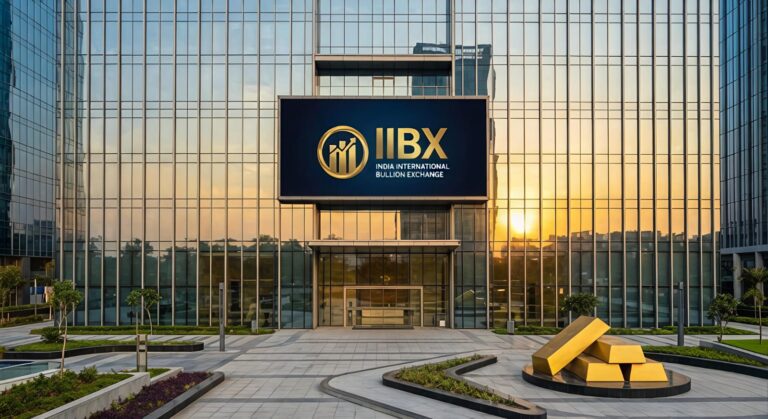
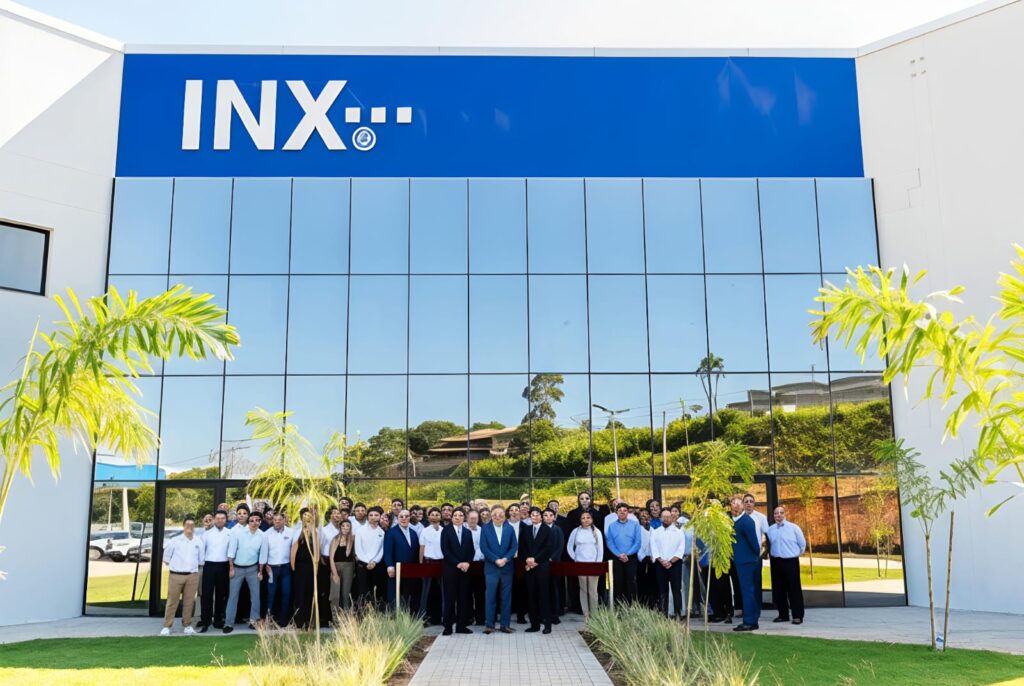
For centuries, the Taj Mahal has stood as the definitive symbol of India’s architectural grandeur, attracting millions from across the globe to witness its symmetry, beauty, and endurance. Today, however, a new monument is rising—not made of white marble, but of fibre-optic cables, high-frequency trading algorithms, and progressive regulatory frameworks. Consequently, the India International Exchange (INX) is rapidly becoming the Taj Mahal of India’s financial landscape.
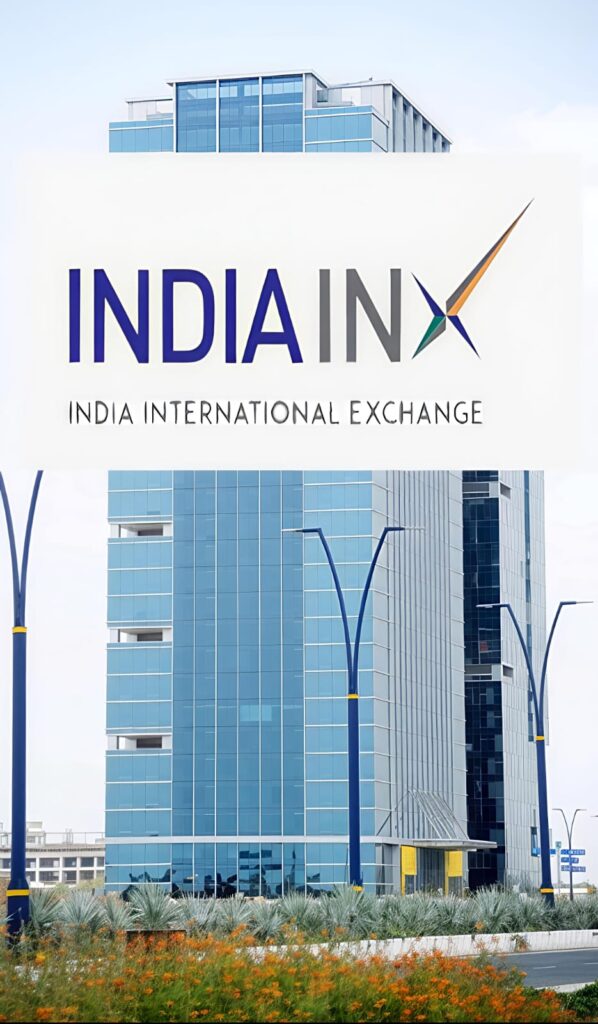
Located in the futuristic Gujarat International Finance-Tec City (GIFT City), INX represents a paradigm shift. For decades, India “exported” its financial markets. Specifically, if a foreign investor wanted to trade Indian derivatives, they went to Singapore or Dubai. Similarly, if an Indian company wanted to raise foreign debt, they went to London or New York. INX was built to reclaim that lost ground. Consequently, it stands today as a gateway that allows the world to invest in India and Indians to invest in the world, all within a tax-efficient, offshore jurisdiction on Indian soil.
Furthermore, this comprehensive guide will explore every facet of INX, from its lightning-fast technology to its tax structures. Ultimately, this will prove why it is the financial equivalent of the Taj Mahal—a structure built to last and designed to awe.
1. What is the India International Exchange (INX)?
The India International Exchange (INX) is India’s first international stock exchange. Established in January 2017, it is a wholly-owned subsidiary of the Bombay Stock Exchange (BSE). However, viewing it merely as a subsidiary would be a mistake. Indeed, it is a distinct entity with its own regulatory environment, operating hours, and currency rules.
The Speed of Light
One cannot discuss INX without mentioning speed. Specifically, the exchange operates on the EUREX T7 technology platform, which is the same engine that powers some of the world’s most advanced derivatives markets.
4 Microseconds: This is the median turnaround time for a trade on INX.
Global Standard: To put this in perspective, the blink of a human eye takes about 300,000 microseconds.
For High-Frequency Traders (HFTs) and institutional algorithmic traders, this speed is not just a luxury; it is a necessity. Just as the intricate inlay work of the Taj Mahal required precision that baffled the artisans of its time, the 4-microsecond latency of INX offers a precision that redefines modern trading efficiency. Consequently, this high-speed environment attracts the brightest minds in quantitative finance.
The Jurisdiction: IFSC
Furthermore, INX is located in the International Financial Services Centre (IFSC). Legally, the IFSC is treated as a “foreign territory” for financial purposes. This means that even though you are physically in Gujarat, financially, you are in a zone that operates more like Singapore or Hong Kong than Mumbai.
Regulator: It is regulated by the International Financial Services Centres Authority (IFSCA), not SEBI directly. Consequently, this allows for more flexible, globally aligned regulations.
Currency: The primary trading currency is the US Dollar (USD). Therefore, this eliminates immediate currency risk for international investors who calculate their returns in dollars.
2. The “Taj Mahal” Metaphor: Building a Global Legacy
Why do we repeatedly compare a stock exchange to the Taj Mahal? The answer lies in ambition and permanence. For instance, the Taj Mahal was not built to be just another mausoleum; rather, it was built to be the mausoleum—a structure so grand it would force the world to take notice.
Similarly, INX is not just another exchange. Instead, it is an audacious attempt to reverse the “brain drain” of capital.
Attracting the World: Just as tourists flock to Agra to see the Taj Mahal, global liquidity is now flocking to GIFT City. Foreign Portfolio Investors (FPIs) no longer need to look at offshore hubs to trade India-centric products.
Symbol of Openness: The Taj Mahal is a blend of Persian, Islamic, and Indian architecture. Likewise, INX is a blend of Indian underlying assets and global regulatory standards. It represents an India that is open for business and ready to compete with New York or London.
Endurance: The foundations of the Taj Mahal were built to withstand the shifting currents of the Yamuna River. In the same way, the foundations of INX are built to withstand global economic volatility through a robust clearing and settlement mechanism.
Therefore, for the modern investor, INX is the new Taj Mahal—a destination that cannot be ignored in a diversified portfolio.
3. The 22-Hour Trading Advantage
One of the most significant limitations of domestic Indian markets (NSE/BSE) is the trading window. Typically, markets open at 9:15 AM and close at 3:30 PM IST. Consequently, if a major geopolitical event occurs in the US at 8:00 PM IST, Indian traders are helpless until the next morning.
In contrast, INX operates for 22 hours a day, six days a week. Indeed, this extended window is a game-changer for risk management.
The Three Global Sessions
Furthermore, INX’s schedule is designed to overlap with every major financial center in the world.
Session 1 (Asian Overlap): Starts at 4:30 AM IST. This captures the opening of markets in Tokyo, Hong Kong, and Singapore. Consequently, traders can hedge positions based on Asian opening sentiment.
Session 2 (European Overlap): As the day progresses, London and Frankfurt open. Consequently, this is a high-volume period where global institutional money moves between the East and West.
Session 3 (American Overlap): Extending until 2:30 AM IST, this session covers the entire trading day of New York.
Scenario:
Imagine a scenario where the US Federal Reserve announces an unexpected rate hike at 11:00 PM IST.
Domestic Trader: They must wait until 9:15 AM the next day. By then, the market has already gapped down, and the opportunity to exit is lost.
INX Trader: They can execute trades immediately on the India 50 index or individual US stocks, protecting their capital in real-time.
Furthermore, this 22-hour cycle ensures that INX is the “sun that never sets” on Indian finance.
4. The Product Ecosystem: Beyond Just Stocks
The India International Exchange offers a diverse suite of products. Specifically, it caters to risk-averse investors and high-risk traders alike.
A. “India 50” and Index Derivatives
The flagship product is the derivative contract on the Indian benchmark indices. Previously, these were known as the SGX Nifty and were traded in Singapore. However, the liquidity has now shifted to GIFT City. Specifically, INX offers parallel liquidity on Sensex 50 and Nifty 50 derivatives.
B. INX Global Access (Investing in US Stocks)
For resident Indians, this is perhaps the most exciting feature. Through the INX Global Access platform, Indian investors can buy stocks listed on foreign exchanges.
Fractional Investing: You don’t need $200 to buy one share of Apple. Instead, you can buy a fraction of a share for as little as $1. This democratizes global wealth creation.
Portfolio Diversification: It allows you to hold assets in USD. Consequently, this protects your wealth against the long-term depreciation of the Rupee. If the USD appreciates against the INR, your investment value grows even if the stock price remains flat.
C. The Global Securities Market (GSM)
While the Taj Mahal is a visual masterpiece, the GSM is a financial masterpiece. Indeed, it is India’s first debt listing platform that allows companies to raise capital in foreign currencies.
Green Bonds: INX has a dedicated “GSM Green” segment. Specifically, this is for listing Green, Social, and Sustainable bonds. Major Indian entities, such as the Indian Railway Finance Corporation (IRFC), have used this to raise billions for eco-friendly projects.
D. Commodities and Currencies
Traders can speculate on the future price of Gold, Silver, and Crude Oil. Additionally, currency pairs like EUR/USD and GBP/USD are available. Because the trades happen in USD, there is no need to worry about the domestic INR volatility affecting the underlying contract value.
5. The Tax Haven Strategy: Incentivizing Growth
To build a financial Taj Mahal, you need more than just pretty architecture; rather, you need incentives. Consequently, the Indian government has aggressively utilized tax waivers to make INX irresistible to global capital.
For Non-Resident Indians (NRIs) and Foreign Investors
Capital Gains Tax: There is a complete exemption on capital gains for derivatives traded on the exchange. This is a massive advantage compared to the 15-20% tax rates seen in many other jurisdictions.
Transaction Taxes: Zero. Specifically, there is no Securities Transaction Tax (STT) and no Commodity Transaction Tax (CTT). Consequently, this reduces the “impact cost” of trading significantly.
Stamp Duty: Furthermore, this is completely waived for transactions executed on the exchange.
For Resident Indians
While resident Indians are still subject to domestic tax rules when they bring money back to their local bank accounts, the cost of trading on INX remains lower due to the absence of STT. Furthermore, the ability to hold assets in USD acts as a natural hedge. Indeed, for a long-term investor, the tax-efficient nature of the IFSC makes it an ideal place to park global savings.
6. How to Start Trading on INX: A Step-by-Step Guide
Accessing this financial Taj Mahal requires navigating specific pathways. Specifically, these depend on your residency status and financial goals.
Pathway 1: The Resident Indian (LRS Route)
If you live in India, you cannot simply transfer money via UPI or a standard net banking transfer. Instead, you must use the Liberalized Remittance Scheme (LRS).
Find a Registered Broker: Look for brokers like HDFC Securities, Kotak Securities, or specialized fintechs that have set up a unit in GIFT City.
Open an IFSC Trading Account: Indeed, this will be a separate account from your standard NSE/BSE Demat.
The A2 Form: You must fill out an A2 form for your bank. This tells the RBI that you are moving money for “Investment in Equity/Debt.”
Remit Funds: Under LRS, you can transfer up to $250,000 USD per financial year.
Start Trading: Once the dollars hit your INX account, you can buy US tech giants or trade commodities. Notably, the RBI generally prohibits “margin trading” (leveraged derivatives) for retail resident Indians under LRS.
Pathway 2: The NRI and Foreign Investor
For NRIs, INX is a paradise. Specifically, the KYC process is streamlined to meet international standards.
Direct Onboarding: You can open an account using your foreign passport or OCI card.
Foreign Funding: Furthermore, you can transfer funds from your foreign bank account directly to the broker in GIFT City. There is no need to route money through an NRE/NRO account in India.
Freedom of Strategy: Consequently, you have fewer restrictions on leveraged derivatives compared to resident Indians.
7. Operational Excellence and Technology
The “beauty” of the Taj Mahal lies in its symmetry. Similarly, the beauty of INX lies in its operational flow. The exchange utilizes a vertically integrated clearing corporation—the India International Clearing Corporation (India ICC).
Why Clearing Matters
The India ICC acts as the central counterparty to every trade. Consequently, if a buyer or seller defaults, the Clearing Corporation steps in to guarantee the settlement. This “novation” process is what gives institutional investors the confidence to trade billions of dollars daily.
Furthermore, the risk management systems at INX are world-class. They utilize real-time margining, meaning they calculate the risk of your portfolio every second. If the market moves against you, the system automatically alerts you or squares off positions to prevent systemic failure. This level of safety is why INX is often referred to as a “fortress” of finance.
8. INX vs. The Competition: A Global Comparison
To truly appreciate the value of INX, we must compare it to its peers.
| Feature | Domestic Market (NSE/BSE) | INX (GIFT City) | Singapore (SGX) |
| Primary Currency | INR | USD | USD / SGD |
| Trading Hours | 6.5 Hours | 22 Hours | ~16 Hours |
| STT / CTT | Applicable (High) | NIL | NIL |
| Capital Gains | 15% – 20% | Exempt (for Non-Res) | Exempt |
| Technology | Standard | 4 Microseconds | 10-20 Microseconds |
| Symbolism | The Local Marketplace | Financial Taj Mahal | The Asian Hub |
As the table illustrates, INX is not just “as good as” global exchanges; in terms of speed and tax efficiency for Indian assets, it is often superior. Consequently, the world is shifting its gaze toward Gujarat.
9. The Role of GIFT City: More Than Just an Address
The Taj Mahal needs Agra to provide the context and history. Similarly, INX needs GIFT City. GIFT City is India’s first operational smart city. It features:
District Cooling Systems: Reducing energy costs for data centers.
Automated Waste Collection: Ensuring a world-class environment for professionals.
A Unified Regulator: The IFSCA has the power of the RBI, SEBI, and IRDAI combined. This means businesses don’t have to run from pillar to post for permissions.
Furthermore, the government has recently allowed “Social Clubs” and specific liquor relaxations within the GIFT City zone to attract global expatriates. This is a clear sign that India is willing to adapt its social policies to ensure the success of its financial hub. Consequently, INX is surrounded by an ecosystem that is designed for 24/7 global operations.
10. The Future: A Monument in the Making
The Taj Mahal took approximately 20 years to complete. Similarly, INX is still in its youth, having been active for less than a decade. However, the roadmap for the next five years is incredibly ambitious.
The SGX-Connect and Beyond
The upcoming “Connect” mechanism will allow traders in Singapore to trade on INX seamlessly. This will consolidate liquidity. Instead of having two fragmented markets for Indian derivatives, there will be one massive pool of capital in GIFT City. Furthermore, the exchange plans to introduce more ESG-linked products, Carbon Credits, and even Aircraft Leasing financial instruments.
Scaling the $10 Trillion Dream
As the Indian economy marches toward the $10 trillion mark, the need for an international gateway will only grow. Ultimately, INX is positioned to be the funnel through which this capital flows. It is not just a place for speculation; it is the infrastructure for India’s future.
Conclusion
The India International Exchange (INX) is not merely a venue for buying and selling stocks. Instead, it is a declaration of India’s arrival on the global financial stage. By offering a 22-hour trading window, zero transaction taxes, and a platform for dollar-denominated assets, it addresses the pain points that previously forced investors offshore.
For the investor, the opportunity is palpable. Whether you are an NRI looking for a tax-efficient way to invest in your homeland, or a resident Indian seeking to own a piece of global tech giants like Google or Nvidia, INX is your gateway. Indeed, it is the Taj Mahal of the modern financial world—impressive, enduring, and open to everyone.
The question is no longer whether you should be on INX, but rather, why aren’t you there yet? The monument is built. The doors are open. The world is trading.
About the Author